Blog Posts
Is Ephedrine Legal in the US? The Real Answer
Mar
If you’re asking is ephedrine legal in the US, you’re probably not looking for vague talk or recycled warnings. You want the real line between legal possession, regulated sale, banned supplement use, and what actually changes from one state to another. That line exists, but it is narrower and more conditional than most buyers assume.
Ephedrine is not simply “legal” or “illegal” across the board in the United States. Its status depends on the product type, the intended use, how it is sold, who is buying it, and where the transaction happens. For serious buyers, that distinction matters because the same compound can be tightly restricted in one form and still available in another under specific rules.
Is ephedrine legal in the US under federal law?
At the federal level, ephedrine is not universally banned. That is the part many people get wrong. The US government does allow certain ephedrine-containing products, but it regulates them heavily because ephedrine is also treated as a listed chemical due to its connection to illicit drug manufacturing.
That means the compound sits in a controlled commercial zone. It is not handled like an ordinary over-the-counter ingredient, and it is not treated like a substance with completely open retail access either. Federal agencies look closely at how ephedrine is marketed, shipped, labeled, and sold.
One of the biggest turning points came when ephedra alkaloids were removed from dietary supplements. That ban hit supplement-style weight loss and performance products hard. It did not erase ephedrine from all legal use in the US, but it did shut down the old model where ephedrine-based fat burners were sold broadly as supplement products.
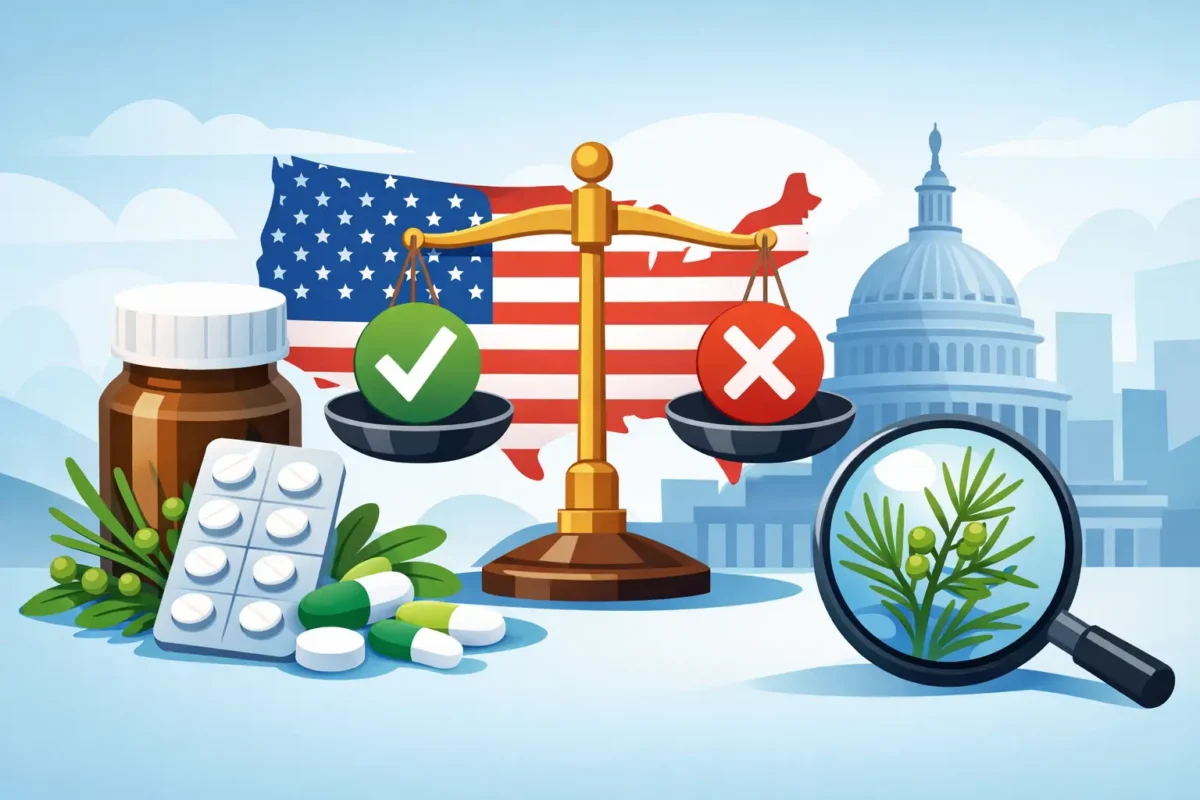
So if someone says ephedrine is banned in America, that is only partly true. If someone says it is fully legal everywhere, that is also wrong. The real answer is conditional legality under a strict regulatory framework.
Why ephedrine gets so much legal attention
Ephedrine has stimulant and bronchodilator properties, which is why it has had medical uses. But regulators do not look at medical chemistry alone. They also look at misuse potential, diversion risk, and how easily a chemical can move through retail and distribution channels.
That is why ephedrine and related compounds have been targeted by federal tracking and sales restrictions. The concern is not just consumer safety. It is also supply chain control. Buyers who know the market already understand this point – legality is often tied less to the substance name itself and more to the form, channel, and transaction pattern.
For example, a product marketed as a dietary supplement for rapid weight loss creates one legal problem. A product handled under a different regulatory category can create another. A bulk order raises another level of attention entirely. That is where many people run into trouble. They assume chemical identity alone answers the question. It does not.
The supplement ban changed everything
If your frame of reference comes from the old bodybuilding or fat-loss market, you need to separate ephedra from every current ephedrine-related product discussion. The FDA moved against dietary supplements containing ephedra alkaloids years ago. That effectively killed mainstream retail sales of those products for weight loss or performance support.
This is why old advice floating around forums is often useless now. People still speak as if the 1990s or early 2000s supplement market never ended. It ended. Any current legality discussion has to start from that reality.
That does not mean every form of ephedrine disappeared from the US market. It means the easy supplement pathway was shut down. After that, legal access became much more dependent on regulatory category, seller compliance, and state-level rules.
State laws can make legal access tighter
Even when federal law leaves room for a product to exist, states can impose tighter controls. That is where the answer to is ephedrine legal in the US becomes even more practical: maybe federally, maybe not in your state, maybe only under certain limits, and maybe only through approved retail handling.
Some states restrict sales more aggressively, require identification, limit quantities, or treat related compounds under stricter frameworks. In practice, that means a buyer cannot rely on a broad national assumption. A product that clears one state’s rules may trigger enforcement issues in another.
This matters for online buyers because interstate shipment adds another layer. The fact that a website offers a product does not automatically mean the transaction is lawful for every delivery location. Serious buyers should think in terms of destination law, not just seller claims.
Prescription, OTC, and chemical supply are not the same thing
One reason this topic stays confused is that people lump together pharmaceuticals, cold-medicine ingredients, raw chemical supply, and old-school supplement products. Legally, those are not interchangeable.
A finished pharmaceutical product with approved use is one category. An over-the-counter product with ephedrine in a restricted setting is another. Raw powder or bulk chemical material raises different questions because it may fall into a more sensitive regulatory and enforcement space.
That distinction becomes critical with quantity. Small consumer-facing retail products are treated very differently from bulk material. Once the conversation moves toward powder, wholesale quantities, or repeated purchasing patterns, the legal risk profile changes fast.
For experienced buyers, this is the point worth remembering: the market may still have supply, but supply does not equal low-risk legality. The bigger and more direct the transaction looks, the more carefully the law is likely to view it.
What buyers usually get wrong
Most confusion comes from three bad assumptions. First, people think if a compound is not fully scheduled like another drug, then it must be freely legal. That is false. A substance can be legal in limited contexts and still heavily restricted.
Second, buyers often assume personal use makes everything safer. It may reduce one kind of exposure, but it does not override sales law, shipping law, import rules, or state restrictions. Personal intent is not a magic shield.
Third, many assume online availability proves legality. It does not. The internet is full of listings that ignore local, state, or federal compliance realities. A vendor can say almost anything. Buyers still carry their own risk.
Importing ephedrine into the US is a separate risk
This is where many transactions break down. Even if a buyer thinks ephedrine is legal in the US in some form, importing it is not the same thing as buying a compliant domestic retail product. Customs scrutiny, chemical classification, documentation, and intended-use concerns all become part of the equation.
Imports draw more attention when the product is in powder form, when the quantity is large, or when paperwork is unclear. The gap between what a buyer believes is legal and what a shipment will actually clear can be wide. That is why experienced operators care about sourcing discipline, packaging, and realistic understanding of what US enforcement focuses on.
A discreet shipment claim means nothing if the underlying transaction is outside the law. Buyers should be honest with themselves about that. Privacy matters, but compliance still decides what happens if a package is inspected.
So, can you buy ephedrine legally in the US?
Sometimes yes, but only in specific forms and under specific rules. That is the only straight answer worth giving. Legal availability is narrow, and the details matter more than the name on the product.
If you are dealing with old supplement-style expectations, you are operating from outdated information. If you are dealing with bulk material, interstate shipment, or import questions, you are in a much more sensitive category. And if you are buying online, state law and product form matter just as much as any seller promise.
For buyers who want fewer surprises, the smart move is to verify the exact product category, check the destination state’s rules, and avoid assuming that federal gray area means open access. If you are researching specialist supply options through sources such as ephedrinepowders.com, treat legality as a transaction-specific issue, not a marketing slogan.
The people who stay out of trouble are usually not the loudest buyers. They are the ones who check the details before money moves, because with ephedrine in the US, the fine print is the whole story.
