Blog Posts
Ephedrine Certificate of Analysis: What to Check
Oct
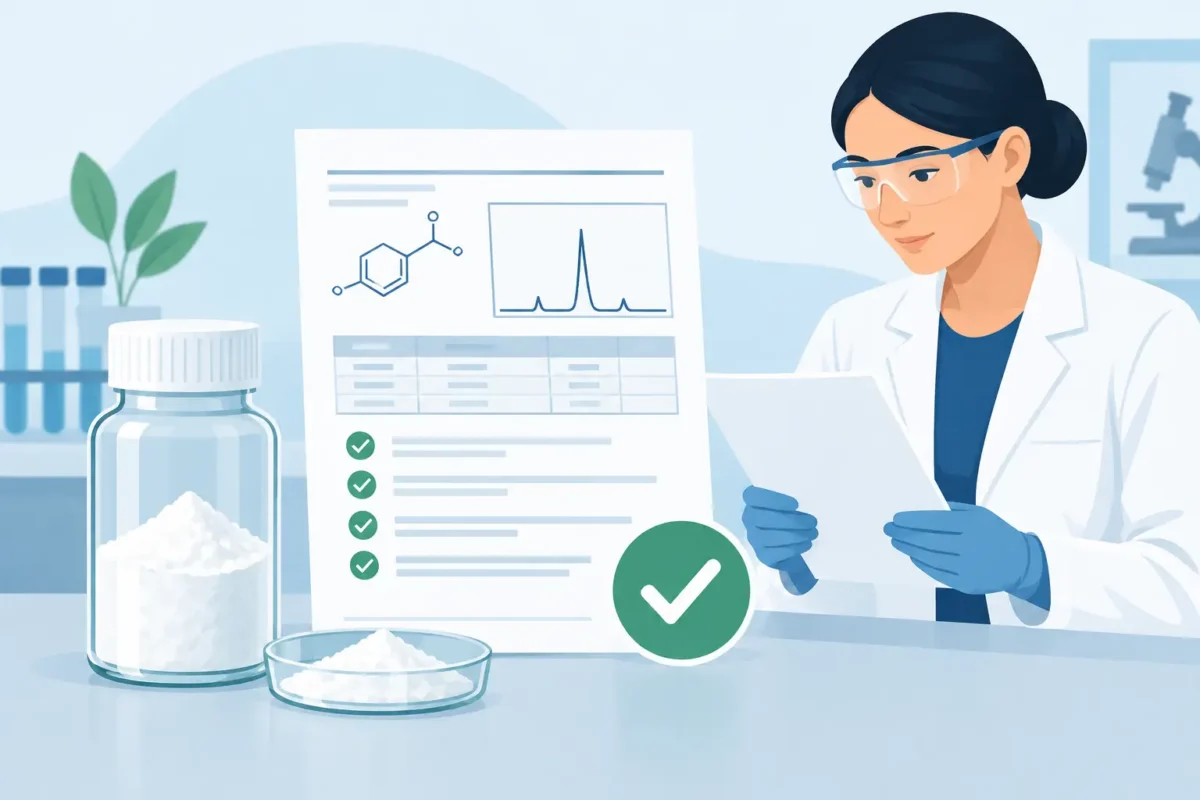
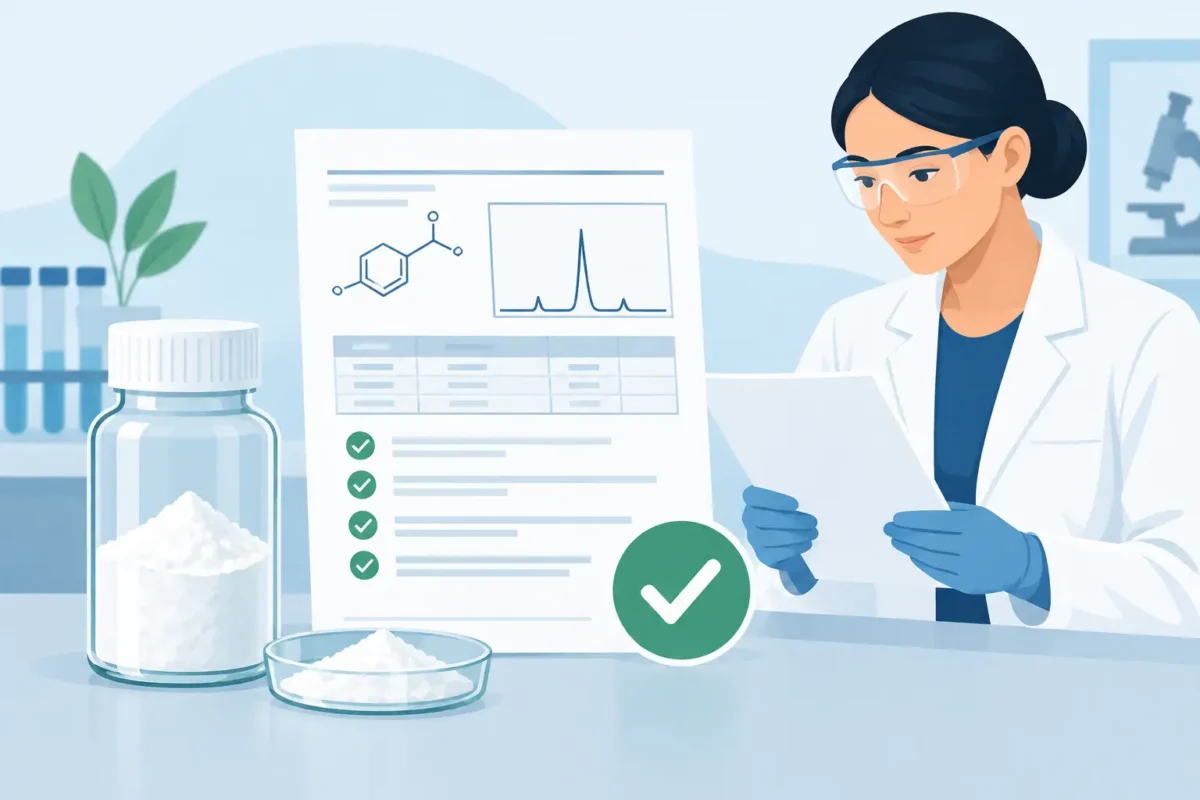
A product claim is only as useful as the paperwork behind it. An ephedrine certificate of analysis gives a buyer, procurement team, or quality reviewer a documented look at the material assigned to a specific batch. It should answer basic but critical questions: What is the material? Which lot was tested? How was it tested? Did it meet the stated specification?
For a regulated stimulant compound, a certificate of analysis, commonly called a COA, is not a marketing accessory. It is a quality-control record. It also does not make a transaction lawful, prove medical suitability, or replace the regulatory documentation required in your jurisdiction. A credible review looks at all three: analytical quality, traceability, and legal compliance.
What an Ephedrine Certificate of Analysis Should Prove
A COA should connect laboratory results to one identifiable production batch. Start with the product name and chemical form. Ephedrine, ephedrine hydrochloride, pseudoephedrine, and related compounds are not interchangeable on paper or in testing. The document should state the exact substance tested, not a vague label such as “stimulant powder” or “pharmaceutical material.”
Next, find the batch or lot number. That number must match the label, packaging record, invoice, and any retained sample documentation. If a seller provides a polished COA with no lot number, or a lot number that does not match the material being offered, the document cannot establish much. It may describe another batch, another date, or another supplier entirely.
A useful COA normally includes the manufacturer or supplier name, sample date, test date, report date, specification limits, actual results, and a release decision such as pass or fail. It should also identify the laboratory or responsible quality unit. A signature, electronic approval, or controlled-document reference adds accountability, although these features should still be verified rather than accepted at face value.
Reading an Ephedrine Certificate of Analysis
The assay result is often the first number buyers look for. Assay measures the amount of the stated active compound in the sample, usually expressed as a percentage. A result of 99% may sound straightforward, but it is only meaningful beside the stated method and specification. Ask whether the result is calculated on an “as is” basis, an anhydrous basis, or another defined basis. Moisture can change how an assay result is interpreted.
Purity is not always identical to assay. A chromatographic purity result may indicate how much of the detected material corresponds to the intended compound, while assay can be based on a different analytical calculation. The terminology depends on the laboratory method. A reliable document makes the distinction clear instead of using “purity,” “potency,” and “assay” as interchangeable sales terms.
For ephedrine salts, identity testing matters as much as the headline percentage. The COA should show that the material is actually the claimed compound and, where relevant, the claimed salt form. Common identity approaches include infrared spectroscopy, chromatographic retention comparison, and other validated chemical identification procedures. The report does not need to reproduce every raw data file, but it should name the method or reference standard used.
Impurities Matter More Than a Round Number
A high assay alone does not rule out problematic impurities. Depending on the material, process, and intended lawful use, a review may need to consider related substances, residual solvents, water content, inorganic residue, and potentially elemental impurities. The appropriate test panel depends on the product specification and applicable requirements.
Related-substances testing looks for chemically similar compounds or process-related byproducts. Residual-solvent testing checks for volatile chemicals that may remain from manufacturing or purification. Water determination, often reported as moisture or loss on drying, helps explain handling characteristics and can affect the basis used for assay results.
The best question is not simply, “What purity percentage do you claim?” Ask, “What impurities were tested, what limits applied, and what were the actual results?” A COA that shows only an impressive purity number without a defined impurity profile leaves major gaps.
Check the Method, Not Just the Result
Analytical results are only as credible as the method used to produce them. For assay and related substances, high-performance liquid chromatography is commonly used in pharmaceutical and chemical quality settings. Gas chromatography may be used for residual solvents. Karl Fischer titration is frequently used for water content. These are examples, not automatic proof that a particular report is valid.
Look for a method reference, such as an internal validated method, pharmacopoeial method, or recognized analytical procedure. The COA should also show acceptance criteria. A result listed as “99.4%” has limited value if the buyer cannot see whether the acceptable range was 98.0% to 102.0%, 99.0% to 101.0%, or something else.
For higher-risk or larger-volume procurement, ask whether the testing laboratory is independent and whether it operates under an appropriate quality system. A certificate from the manufacturer can be useful, but an independent test of a representative sample provides an additional layer of confidence. That added verification has a cost and can delay release, so the right approach depends on order size, intended use, and regulatory exposure.
Red Flags That Deserve a Closer Look
A clean-looking PDF is not the same as a trustworthy COA. Pause and investigate when you see any of the following:
- No batch number, sample date, test date, or report date.
- A generic product description that does not identify the exact chemical form.
- Results without specifications, units, methods, or pass-fail criteria.
- Obvious formatting errors, altered values, inconsistent dates, or laboratory details that cannot be confirmed.
- The same certificate reused for every order despite different claimed lots.
A COA should be internally consistent. The product name, lot number, test panel, signature date, and laboratory identity should tell one coherent story. If any part of that story changes when basic questions are asked, do not treat the document as proof of quality.
A COA Does Not Settle Legal or Safety Questions
Ephedrine is subject to significant legal controls because of its pharmacological effects and its status under chemical-control frameworks. Requirements vary by country, state, product form, quantity, intended use, licensing status, and import rules. A passing COA does not authorize possession, importation, resale, compounding, or use.
It also does not establish that a material is appropriate for human consumption or self-treatment. Ephedrine can elevate heart rate and blood pressure and may interact with other stimulants, certain medications, and underlying cardiovascular conditions. Buyers should follow applicable law and seek qualified medical or regulatory guidance where required, rather than relying on a supplier document as a safety clearance.
Preserve the Record After Verification
Once a COA has been reviewed, keep it with the matching lot record. Store a copy of the label, purchase documentation, release paperwork, and any correspondence confirming the batch identity. If material is divided into smaller containers, maintain traceability so each container can still be connected to the original lot.
Storage also affects whether a batch remains suitable for its stated specification. Keep material in its original, properly labeled container where possible, protected from moisture, heat, contamination, and unauthorized access. A COA reflects the sample when it was tested. It cannot guarantee the condition of material that has been poorly stored, mixed, or transferred without controls.
The strongest purchasing decision is not based on a bold purity claim. It is based on a COA that can be matched to the lot in hand, read against clear specifications, and supported by responsible handling and lawful documentation.