Blog Posts
Ephedrine Safety Risks, Interactions, and Warning Signs
Oct
A racing pulse after taking ephedrine is not a result to push through. It can be an early warning that the stimulant effect is stronger than your body can safely tolerate. Ephedrine safety starts with treating the compound as a potent medication, not a casual energy product or a substitute for sleep, food, or medical care.
Ephedrine stimulates the nervous system and can increase heart rate, blood pressure, alertness, and airway opening. Those effects may be medically useful in limited settings, but they also create real cardiovascular and neurological risks. The margin between a noticeable stimulant effect and a dangerous reaction can be narrower than many people expect, especially when other substances, underlying conditions, or uncertain product identity are involved.
What Ephedrine Safety Actually Means
Safe use is not only about the amount taken. It depends on the specific product, the reason for use, a person’s health history, other medications and substances, and whether the material is a legally regulated medicine with clear labeling. A label or a seller claim alone cannot determine whether a product is appropriate for an individual.
In the United States, ephedrine-containing products and related ingredients are subject to significant federal and state controls. Rules differ by product type and location. A legal product in one context may still be unsuitable, restricted, or unsafe for a particular person. Do not assume that availability, packaging, or a “pharmaceutical-grade” description replaces medical evaluation or regulatory compliance.
The highest-risk situations often involve using ephedrine for nonmedical stimulation, combining it with other stimulants, or using material with an unclear concentration or chain of custody. If the identity or concentration of a powder is uncertain, do not use it. Visual appearance cannot confirm purity, strength, or the absence of harmful contaminants.
Who Should Avoid Ephedrine?
Ephedrine is not a good fit for everyone. People with heart disease, high blood pressure, irregular heartbeat, coronary artery disease, glaucoma, thyroid disease, diabetes, enlarged prostate symptoms, anxiety disorders, panic symptoms, or a history of stroke should speak with a qualified clinician before using any ephedrine product. The same caution applies to people with a history of stimulant misuse or dependence.
Pregnancy and breastfeeding require particular care. A clinician who knows the full medical situation should make decisions about medicines during these periods. Children and adolescents should not be treated as smaller adults when stimulant-containing products are involved.
Even a person who considers themselves healthy can have an unexpected reaction. Heat, dehydration, lack of sleep, illness, strenuous exercise, and fasting can make stimulant side effects feel more intense and may increase risk. If you have previously had chest pain, fainting, severe palpitations, or unusual shortness of breath with a stimulant, that history matters.
Heart and Blood Pressure Risks
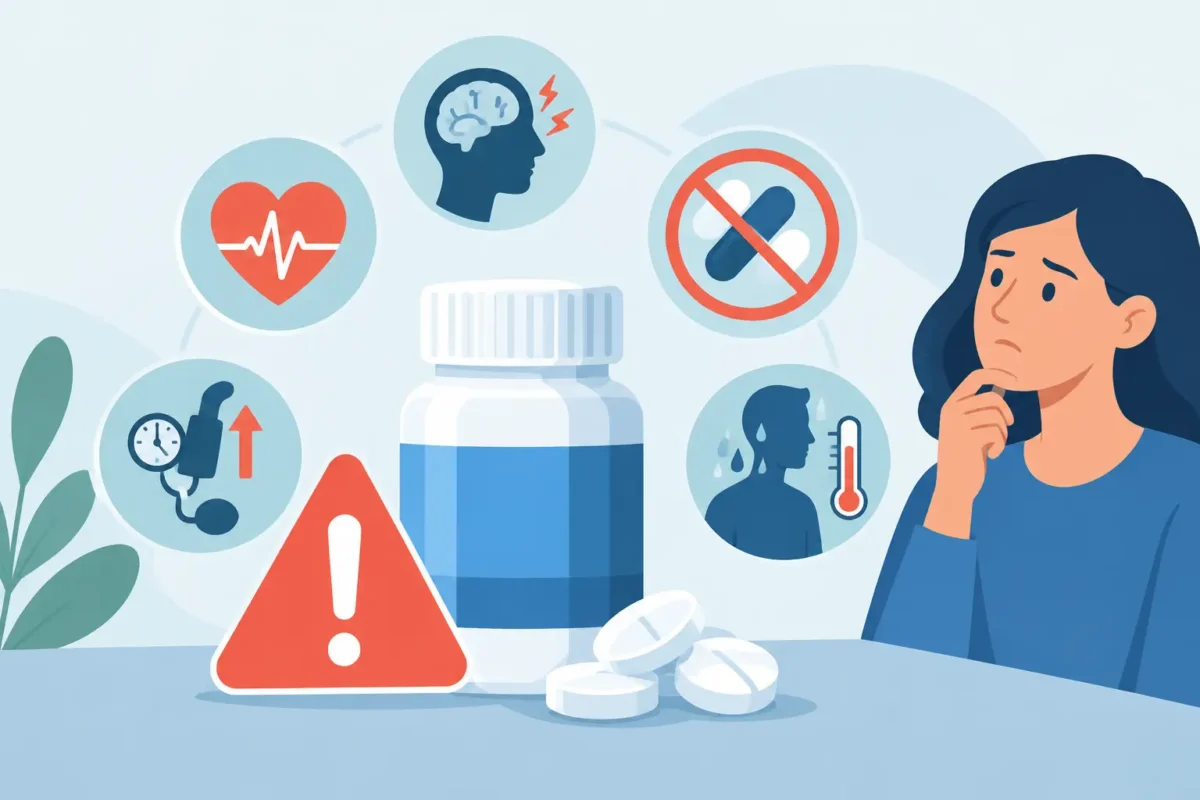
Ephedrine can raise blood pressure and make the heart beat faster or harder. For some people, that may lead to palpitations, chest discomfort, tremor, headache, or anxiety. More serious outcomes can include dangerous rhythm disturbances, heart attack, stroke, or seizure, particularly in people with risk factors or when ephedrine is combined with other stimulants.
Do not use a wearable heart-rate number as proof that everything is fine. A normal-looking number does not rule out blood-pressure elevation, arrhythmia, or an adverse drug interaction. Symptoms, medical history, and the substances involved all matter.
Interactions That Raise the Risk
The most preventable ephedrine harms come from combinations. Caffeine deserves special attention because it is common in coffee, energy drinks, pre-workout products, tea, soda, and some pain or cold medicines. Stacking caffeine with ephedrine can amplify jitters, insomnia, elevated heart rate, anxiety, and blood-pressure effects.
Other stimulant medications can create similar concerns, including medicines used for attention disorders and certain wakefulness conditions. Illicit stimulants carry an even greater risk. Combining substances does not create a controlled or predictable result. It increases uncertainty and can place significant strain on the heart and nervous system.
Some non-stimulant medications can also interact. Decongestants, certain antidepressants, thyroid medicines, asthma medicines, blood-pressure medicines, and some cough-and-cold products may change the effect of ephedrine or make side effects more likely. Monoamine oxidase inhibitors, commonly called MAOIs, are especially important because serious blood-pressure reactions can occur with sympathomimetic drugs.
Alcohol is not a safe workaround. It can impair judgment, conceal early warning symptoms, worsen dehydration, and encourage redosing or risky behavior. Before using any ephedrine-containing medicine, have a pharmacist or clinician review every prescription medicine, nonprescription medicine, supplement, and recreational substance involved.
Common Side Effects Versus Danger Signs
Milder effects can include nervousness, restlessness, trouble sleeping, nausea, dry mouth, sweating, tremor, headache, and a fast heartbeat. These effects are not automatically harmless. If they are severe, persistent, or escalating, stop using the product and seek medical advice.
Some symptoms call for urgent action rather than waiting to see whether they pass. Seek emergency medical help immediately for:
- Chest pain, pressure, or pain spreading to the arm, back, jaw, or shoulder
- Severe shortness of breath, fainting, collapse, or a markedly irregular heartbeat
- Seizure, confusion, severe agitation, hallucinations, or sudden weakness
- A severe headache with vision changes, trouble speaking, facial drooping, or loss of coordination
If an overdose or serious reaction is suspected, call 911 or contact Poison Control at 1-800-222-1222 in the United States. Do not try to counteract the stimulant effect with alcohol, sedatives, another medication, or additional substances. Keep any packaging available for responders, but do not delay emergency care to locate it.
The Problem With Uncertain Powders and Unclear Labels
Powdered stimulant materials present additional safety concerns because small measurement errors can have outsized effects. Product names can also be misleading. Ephedrine, pseudoephedrine, ephedra-derived products, and other stimulants are not interchangeable, and a label may not tell the full story if the source is not independently verified.
Contamination, substitution, inaccurate concentration, and cross-contact can make an otherwise familiar compound unpredictable. This is why a sealed container, professional-looking packaging, or a low price should never be treated as evidence of safety. Material intended for industrial, research, or chemical purposes should not be assumed safe for human use.
Store any legitimately obtained medication in its original labeled container, away from children, pets, heat, and moisture. Do not share it. Someone else may have a medical condition or medication interaction that is not obvious to you. Secure storage also reduces accidental exposure and prevents a stimulant product from being mistaken for something else.
Dependence, Sleep Loss, and Escalating Use
Ephedrine may create a cycle of repeated use when people rely on it for energy, appetite suppression, work demands, or training. Tolerance can develop, meaning the original effect feels less noticeable. Chasing that effect by taking more or using it more often increases the chance of cardiovascular harm, insomnia, anxiety, and dependence.
Sleep loss is a major warning sign, not an inconvenience to solve with more stimulants. Poor sleep can worsen irritability, panic symptoms, blood-pressure control, decision-making, and cravings. If ephedrine use is affecting sleep, work, relationships, or the ability to feel normal without it, speak with a healthcare professional or substance-use counselor. Asking for help early is practical risk control.
A Direct Safety Check Before Use
Before considering an ephedrine-containing product, ask whether there is a clear medical reason, a known and lawful product identity, and a clinician or pharmacist who has reviewed your health conditions and current medicines. If any answer is no, the safer decision is to stop and get professional guidance first.
The goal is not to minimize risk after symptoms appear. It is to prevent the situation that creates them. When your heart, blood pressure, sleep, or judgment is on the line, caution is not an obstacle. It is the decision that keeps a short-term stimulant effect from becoming a long-term problem.
