Blog Posts
Stimulant Use Disorder Warning Signs to Watch
Nov
A person does not need to use a stimulant every day for the pattern to become dangerous. The earliest stimulant use disorder warning signs are often practical changes: taking more than planned, thinking about the next dose constantly, sleeping poorly, or continuing despite clear problems at work, at home, or with health. Recognizing those changes early can prevent a medical emergency and make it easier to seek help before the situation becomes more severe.
Stimulants can include prescribed medications as well as nonmedical or illicit substances. Ephedrine and pseudoephedrine products can also place strain on the body when misused, combined with other stimulants, or taken in excessive amounts. Potency, individual tolerance, underlying heart conditions, other medications, and sleep deprivation all affect risk. There is no universally safe shortcut around those factors.
What stimulant use disorder looks like
Stimulant use disorder is a clinical term for a pattern of stimulant use that becomes difficult to control and causes meaningful harm or distress. It is not defined only by quantity. Someone may take a comparatively small amount yet show strong cravings, escalating frequency, or serious consequences. Another person may have built a high tolerance and still believe they are functioning normally while their physical and mental health are deteriorating.
The central issue is loss of control. Use starts to take priority over responsibilities, relationships, finances, sleep, food, and safety. A person may sincerely intend to reduce or stop, then find themselves returning to the same pattern within days or hours.
Dependence and stimulant use disorder overlap but are not identical. Physical adaptation can occur with repeated use, while a disorder involves compulsive behavior and harm. The distinction matters clinically, but either situation deserves an honest assessment rather than denial.
Stimulant use disorder warning signs in daily life
Changes in behavior are often more visible than a person’s actual intake. Watch for a recurring pattern, not one isolated bad day. Stimulant effects can temporarily resemble productivity or confidence, which is why the problem can be easy to rationalize at first.
A common warning sign is escalation. The person begins using more often, takes a larger amount to get the same effect, redoses earlier than intended, or combines products to extend stimulation. They may spend significant time obtaining, using, recovering from, or thinking about a stimulant.
Other signs appear around routine and responsibility. Missed work, late arrivals, neglected family obligations, sudden money problems, secretive behavior, or repeated conflicts about use can indicate that the substance is becoming the organizing force in daily life. Someone may withdraw from friends who question the behavior and spend more time alone or with people who support continued use.
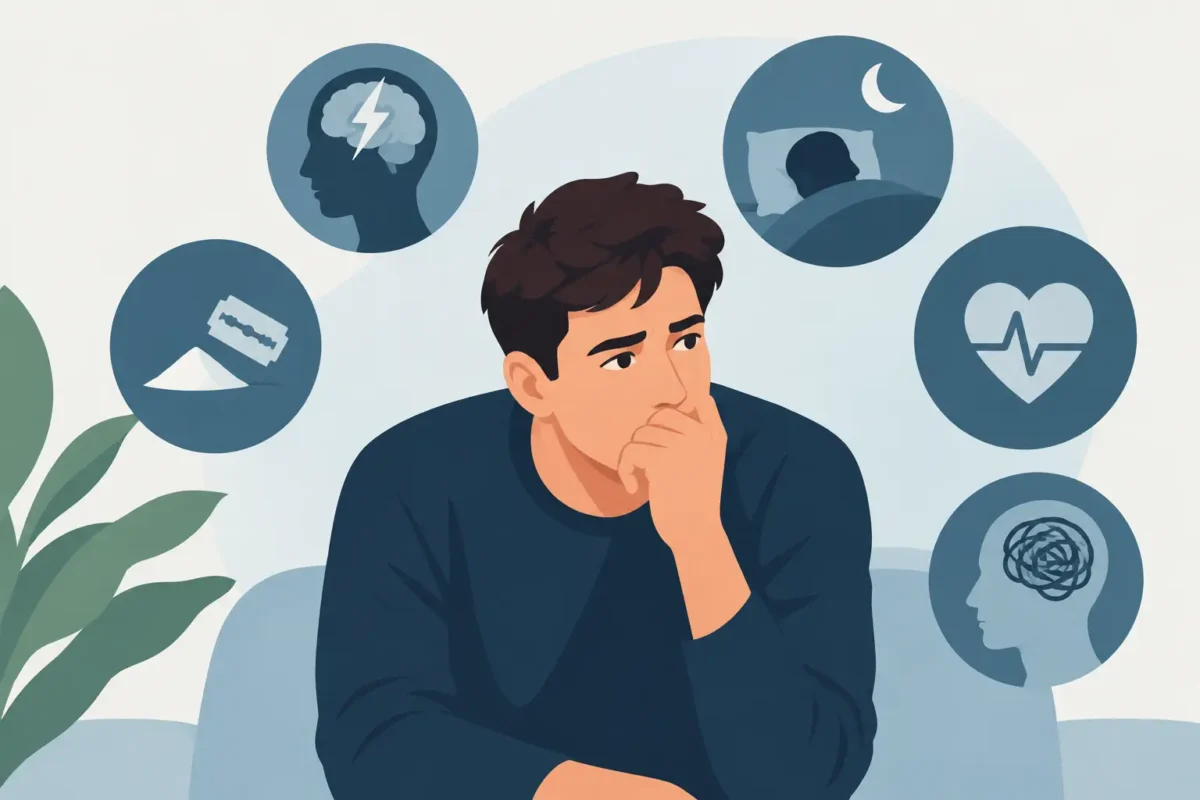
Sleep disruption is especially significant. Going long periods with little sleep, followed by a crash marked by exhaustion, low mood, irritability, and prolonged sleeping, is not a sustainable cycle. Poor sleep also impairs judgment, making a person more likely to redose or mix substances in an attempt to feel normal.
Look closely at whether use continues despite known harm. Chest pounding, anxiety, weight loss, high blood pressure, panic episodes, dental problems, relationship damage, or legal trouble should be clear signals to stop. Continuing anyway is one of the strongest indicators that professional help may be needed.
Physical and mental health changes
Stimulants activate the nervous system. Some effects can occur even at lower exposure, while higher doses, frequent redosing, dehydration, heat, and combinations raise the danger substantially. Common physical changes include reduced appetite, dry mouth, sweating, tremor, jaw tension, headaches, nausea, rapid heartbeat, and elevated blood pressure.
With sustained misuse, people may look noticeably run down. Weight loss, dark circles, poor hygiene, skin picking, and an irregular sleep schedule can develop. Exercise, hot environments, and inadequate fluids can add cardiovascular stress. Existing heart disease, high blood pressure, thyroid problems, anxiety disorders, or a history of psychosis can make stimulant-related complications more likely.
Mental and emotional changes can be just as serious. Irritability, agitation, unusually intense focus, restlessness, anxiety, and depressed mood during a crash are common. More severe signs include paranoia, hearing or seeing things others do not, fixed suspicious beliefs, confusion, or aggressive behavior. These symptoms require prompt medical attention, particularly if they occur after extended wakefulness or heavy use.
It is also worth taking new depression seriously. When stimulant effects wear off, dopamine and energy can drop sharply. A person may feel empty, hopeless, ashamed, or unable to get out of bed. Talk of self-harm, suicide, or having no reason to live is an emergency, not a private problem to wait out.
When a pattern becomes urgent
Call 911 or seek emergency medical care immediately for chest pain, trouble breathing, fainting, seizure activity, severe headache, weakness on one side of the body, severe confusion, dangerously high agitation, or an irregular or very fast heartbeat. Do not leave a person alone if they are severely confused, paranoid, overheated, or at risk of harming themselves or someone else.
While waiting for help, keep the environment calm, move the person away from heat or physical exertion, and do not give them more stimulants, alcohol, or other drugs to counteract symptoms. If they are unconscious, having a seizure, or struggling to breathe, emergency services should guide the response. Being honest with medical personnel about possible substances used can help them treat the situation safely.
A crisis is not the only reason to get support. Repeated palpitations, panic attacks, inability to sleep, escalating doses, failed attempts to quit, or growing secrecy are enough to schedule a medical or addiction assessment. Early care can address both stimulant use and the reasons the stimulant became necessary or appealing in the first place, such as fatigue, untreated attention symptoms, depression, pressure to perform, or chronic stress.
How to have the conversation
If you are worried about someone else, avoid turning the first conversation into an argument about labels. Lead with specific observations: they have not slept, they seem frightened, their heart is racing, or they have missed obligations and are not acting like themselves. Use a calm tone and ask whether they feel able to stop or cut back.
Statements such as “I’m worried because I’ve seen you go without sleep for two nights” are more useful than accusations. A person may minimize the problem, especially if use has been tied to work output, weight control, social confidence, or staying awake. You do not have to win the debate to set boundaries or encourage a medical evaluation.
For someone recognizing the signs in themselves, honesty is a practical first step. Track use, sleep, mood, and physical symptoms without editing the record to make it look better. Bring that information to a doctor, addiction specialist, or qualified mental health professional. Treatment may include behavioral therapy, recovery support, treatment for co-occurring anxiety or depression, and a plan for managing cravings and relapse risk.
There is no prize for waiting until consequences become dramatic. The moment stimulant use begins taking more than it gives, getting a clear medical assessment is a strong and responsible next move.
