
Blog Posts
Pseudoephedrine vs Ephedrine Differences
Sep
Pseudoephedrine vs ephedrine differences matter because these compounds are often treated as interchangeable when they are not. Both can raise heart rate and blood pressure, both are subject to significant legal controls, and both require careful attention to medical history and other medications. But their chemistry, common clinical roles, intensity of stimulant effects, and regulatory status are meaningfully different.
For anyone comparing labels, evaluating a medication history, or trying to understand a regulated stimulant-related product, the central point is simple: similar names do not make two substances equivalent. A small structural difference changes how each compound acts in the body and how health professionals use it.
Pseudoephedrine vs Ephedrine Differences at a Glance
Ephedrine and pseudoephedrine are closely related sympathomimetic compounds. They activate parts of the body’s fight-or-flight signaling system, especially pathways involving norepinephrine. This is why either substance can affect nasal blood vessels, heart rate, blood pressure, alertness, and sleep.
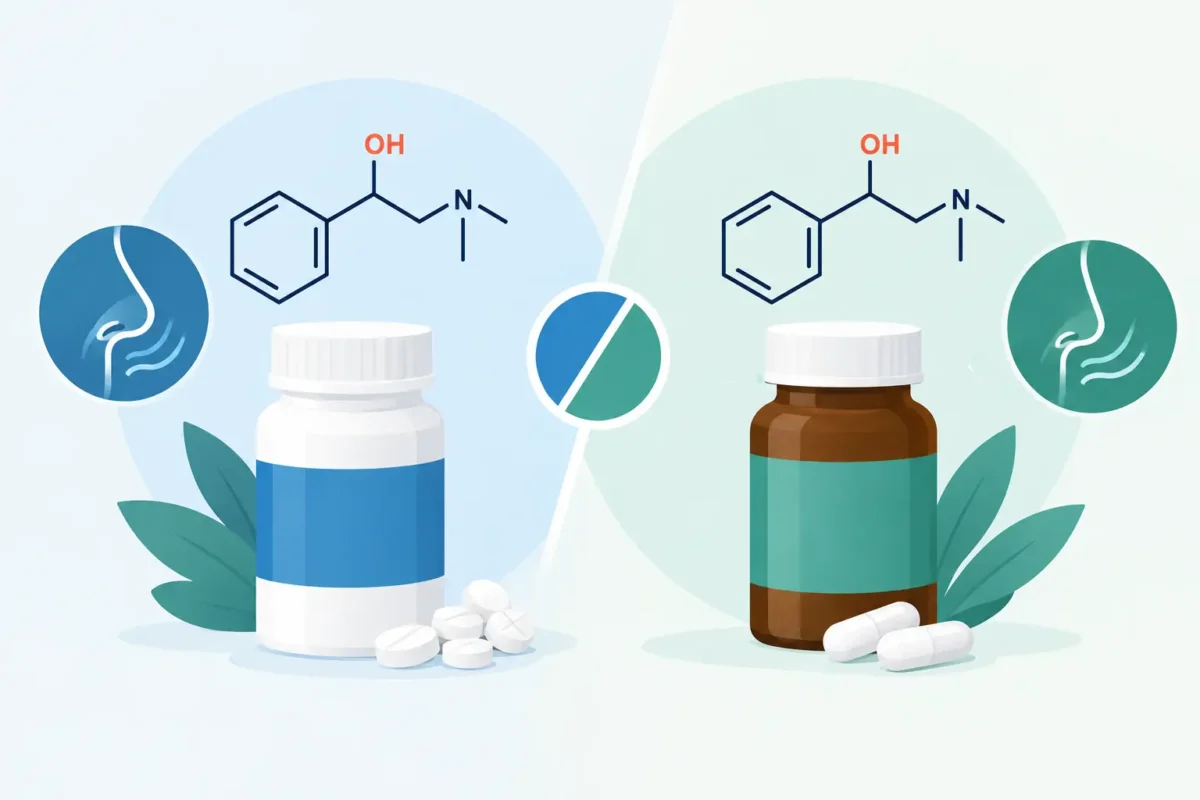
The compounds are diastereomers, meaning they contain the same atoms arranged differently in three-dimensional space. That difference is not merely academic. Ephedrine generally produces stronger direct stimulant and cardiovascular effects, while pseudoephedrine is better known for shrinking swollen nasal tissue during temporary congestion.
Pseudoephedrine is commonly used as an oral decongestant. Ephedrine has more limited modern outpatient use in the United States and is often associated with monitored medical settings, particularly treatment of low blood pressure during anesthesia. Ephedrine-containing dietary supplements marketed for weight loss or athletic performance have faced major restrictions because of serious safety concerns.
How Their Effects Differ
Pseudoephedrine is primarily a decongestant
Pseudoephedrine narrows blood vessels in the nasal passages. That can reduce swelling and relieve a blocked or stuffy nose from a cold, allergies, or sinus irritation. It can still feel stimulating, especially for people who are sensitive to caffeine or who take it late in the day. Restlessness, insomnia, tremor, palpitations, and a rise in blood pressure can occur.
Its effects are generally more focused on peripheral blood vessels than ephedrine’s. That does not mean pseudoephedrine is risk-free. A person with uncontrolled hypertension, certain rhythm disorders, narrow-angle glaucoma, hyperthyroidism, or significant urinary retention may face a higher risk of adverse effects.
Ephedrine has broader stimulant activity
Ephedrine can both encourage norepinephrine release and directly stimulate adrenergic receptors. In practical terms, it may have more pronounced effects on pulse, blood pressure, wakefulness, and the central nervous system than pseudoephedrine. The response can vary widely based on a person’s health, other substances, and the specific formulation involved.
This stronger activity explains why ephedrine has a narrower margin for casual use. It has legitimate medical applications, but those applications are not a green light for unsupervised stimulant use. Higher exposure can increase the likelihood of anxiety, agitation, severe insomnia, chest discomfort, irregular heartbeat, dangerously elevated blood pressure, seizures, or psychiatric symptoms.
A common mistake is assuming that a lower perceived stimulant effect from pseudoephedrine makes it suitable to combine with ephedrine. It does not. Combining sympathomimetic substances can compound cardiovascular strain without creating a predictable or safe result.
Approved Uses and What They Do Not Mean
Pseudoephedrine remains available in many U.S. pharmacies for short-term relief of nasal congestion. It is often kept behind the pharmacy counter because federal law regulates retail access and purchase quantities. Its availability does not mean it is appropriate for every cold symptom or every customer.
Ephedrine is used in specific medical contexts, including the management of clinically significant low blood pressure, such as hypotension occurring during anesthesia. Its use is commonly supervised because blood pressure and cardiac response may need close observation. In some circumstances, clinicians may use it for other purposes based on their professional judgment.
Neither compound should be viewed as a general-purpose energy, fat-loss, workout, or concentration aid. Those uses increase risk while bypassing the clinical circumstances in which potential benefits are weighed against harms. Product claims that make stimulant effects sound routine or harmless should be treated cautiously.
Safety Depends on the Person, Not Just the Compound
The question is not simply whether pseudoephedrine is “milder” or ephedrine is “stronger.” The relevant question is whether either substance is appropriate for a particular person at a particular time. A healthy adult may still have a difficult reaction, and someone with underlying cardiovascular disease may face substantially greater danger.
Extra caution is warranted for people with high blood pressure, coronary artery disease, heart rhythm problems, diabetes, thyroid disease, anxiety disorders, glaucoma, prostate or urinary issues, kidney impairment, or a history of substance misuse. Pregnancy and breastfeeding also require clinician-specific guidance rather than assumptions based on over-the-counter status.
The most concerning warning signs include chest pain, fainting, severe headache, confusion, shortness of breath, a pounding or irregular heartbeat, seizure activity, or extreme agitation. These symptoms require urgent medical evaluation. Do not attempt to offset a stimulant reaction with alcohol, sedatives, or additional medications without medical direction.
Interactions Are a Major Part of the Risk
Both compounds can interact with medications and substances that affect blood pressure, heart rhythm, mood, or alertness. Monoamine oxidase inhibitors, or MAOIs, are a particularly serious concern because the combination can trigger a dangerous increase in blood pressure. A clinician or pharmacist should review timing as well as the medication list, since MAOI-related interaction risk can persist after a medicine is stopped.
Other stimulants can also increase risk. That includes high-caffeine products, prescription stimulants, certain pre-workout formulas, nicotine products, and some illicit substances. Combining these agents may produce more than simple jitters. It can create substantial cardiac and neurological stress.
Some antidepressants, blood pressure medications, asthma medicines, and cold products may also change the effect profile. Multi-symptom cold remedies deserve special attention because they can contain several active ingredients, making accidental duplication easier than people expect.
Legal Status and Access Are Different Issues
Federal and state rules distinguish between pseudoephedrine and ephedrine products, and requirements can change depending on the formulation, intended use, quantity, and location. Pseudoephedrine sales are subject to federal retail limits, identification requirements, and transaction logging under U.S. law because it can be diverted for illegal drug production.
Ephedrine is also regulated and is not freely interchangeable with ordinary decongestant products. Restrictions on ephedrine alkaloid dietary supplements are especially relevant in the United States. International rules may be stricter, different, or tied to import documentation, so a product being available somewhere does not establish that possession, importation, or use is lawful elsewhere.
Discreet packaging, product descriptions, or claims about purity never replace legal compliance or medical suitability. Anyone handling regulated chemical materials should understand that a label alone cannot confirm identity, concentration, contamination status, intended use, or regulatory permission.
Why Powder Form Raises Additional Concerns
Comparing a standard, labeled medication with an unlabeled or bulk powder is not an apples-to-apples comparison. Pharmaceutical products intended for patients are manufactured, packaged, and labeled for a specific route and use. Bulk chemical material may present separate hazards involving identity verification, contamination, moisture exposure, storage stability, measurement error, and accidental exposure.
Potency claims should never be treated as a substitute for independent quality controls. With potent sympathomimetic materials, even small errors can have outsized consequences. Powder exposure also creates practical risks for household members, children, pets, and anyone who may mistake the material for something else.
If a person is considering either compound for a health purpose, the safest next step is not guessing based on a comparison chart. It is bringing the exact product name, ingredient list, medical conditions, and current medication list to a pharmacist or clinician for a direct answer.
