Blog Posts
Ephedrine Hydrochloride CAS Number and Properties
Oct
The ephedrine hydrochloride CAS number and properties matter because a material name alone is not enough to establish identity, quality, or appropriate handling. For laboratories, wholesale buyers, and experienced chemical purchasers, the CAS number, formula, appearance, and analytical documentation should agree before material is accepted, stored, or evaluated.
Ephedrine Hydrochloride CAS Number
The commonly referenced CAS Registry Number for ephedrine hydrochloride is 50-98-6. This identifier is used to distinguish the hydrochloride salt from ephedrine free base and from related stimulant compounds that may have similar names, effects, or chemical structures.
A CAS number is useful for cataloging, safety documentation, regulatory review, and laboratory communication. It is not, however, proof that a powder is authentic. A label can carry the correct number while the contents remain mislabeled, degraded, diluted, or otherwise unsuitable. Reliable identity confirmation depends on the complete specification package, not one identifier alone.
Ephedrine hydrochloride is the hydrochloride salt form of ephedrine, a sympathomimetic compound with significant physiological activity. The salt form is generally selected where a stable, water-soluble crystalline material is needed. It should never be confused with pseudoephedrine hydrochloride, even though both substances are chemically related and subject to regulatory controls.
Core Ephedrine Hydrochloride Properties
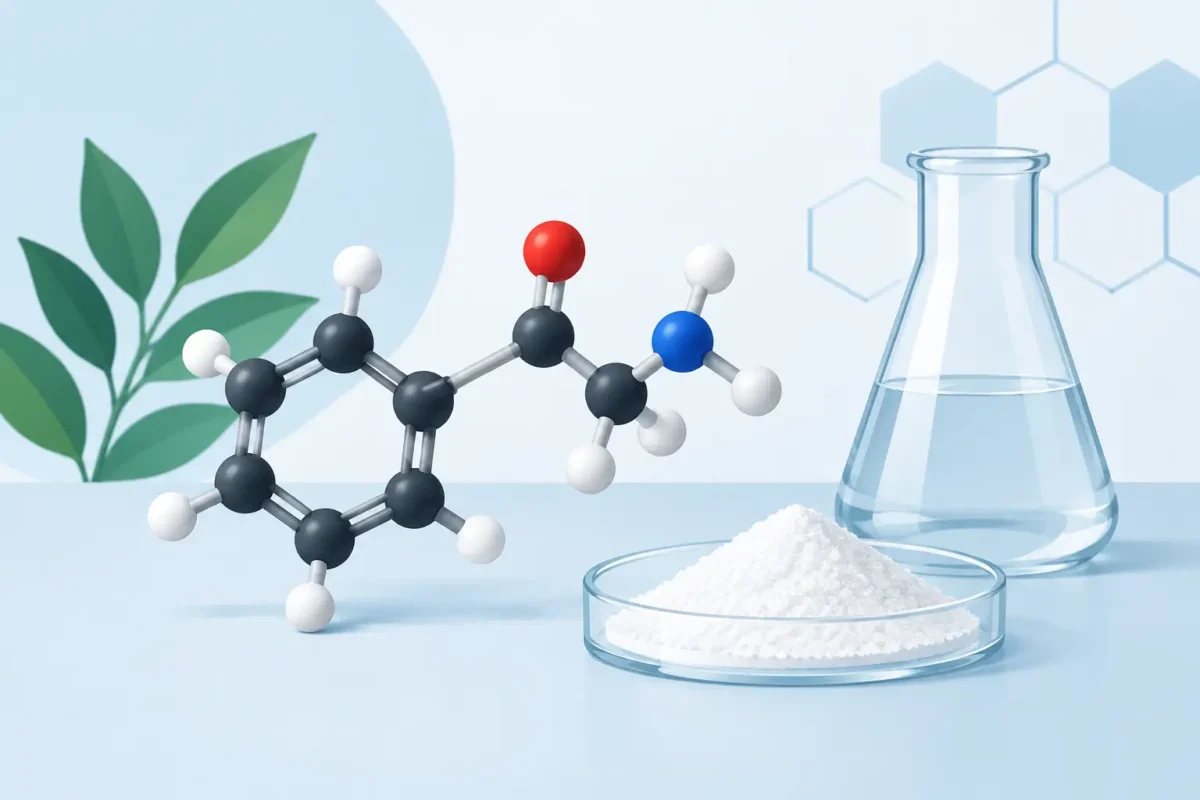
Ephedrine hydrochloride is generally described as a white or nearly white crystalline powder. It may also appear as colorless crystals depending on crystallization and particle size. A clean white appearance is not a quality test by itself. Many powders can look similar, and visual inspection cannot verify chemical identity or purity.
The molecular formula is commonly written as C10H16ClNO, reflecting ephedrine combined with hydrochloric acid. Its molecular weight is approximately 201.69 g/mol. The free-base form of ephedrine has a different molecular weight and different physical behavior, which is why documentation should clearly state the salt form rather than using the word “ephedrine” alone.
Ephedrine is a chiral compound, meaning its three-dimensional arrangement can matter. Different stereochemical forms can have different pharmacological characteristics. When reviewing a specification, confirm whether it identifies a specific ephedrine isomer, a defined form, or a broader material description. This point is especially relevant when comparing certificates of analysis from different suppliers or evaluating materials intended for technical work.
Solubility and solution behavior
Ephedrine hydrochloride is soluble in water and is also soluble in alcohol to a more limited extent. Water solubility is one reason the hydrochloride salt is widely recognized in pharmaceutical and analytical contexts. Solubility can still vary with temperature, solvent composition, concentration, and the presence of other chemicals.
A clear solution does not automatically indicate purity. Conversely, cloudiness or unexpected residue may signal contamination, incompatible solvents, poor filtration, degradation, or simple concentration limits. Any unexpected change in solution appearance should be treated as a quality-control issue rather than ignored.
Stability and hygroscopic concerns
In normal dry storage conditions, ephedrine hydrochloride is generally considered more manageable than many unstable organic compounds. That does not mean it is unaffected by poor handling. Heat, humidity, repeated opening, contamination, and unsuitable packaging can reduce confidence in the material over time.
Powdered chemicals are particularly vulnerable to exposure once the original seal is broken. Moisture uptake can alter flow characteristics, produce clumping, and complicate accurate weighing. For that reason, a tightly closed container, dry environment, controlled room temperature, and clear lot labeling are practical baseline measures.
Avoid assuming that a material remains within specification simply because it still looks white. Stability is assessed through appropriate testing, not appearance alone. For retained inventory, lot traceability and periodic review are more reliable than guesswork.
How to Verify Material Identity Beyond the CAS Number
A serious specification review should connect the CAS number with the product name, molecular formula, lot number, test date, and analytical results. If these items conflict, pause the transaction or evaluation until the discrepancy is resolved.
A certificate of analysis may report identification testing, assay, moisture content, residual solvents, related substances, and physical description. The exact testing panel depends on the intended use and applicable quality standard. An assay result can be useful, but it does not replace a full impurity profile where higher assurance is required.
For laboratory-level confirmation, established techniques may include infrared spectroscopy, chromatography, melting-range evaluation, and other validated analytical methods. The right method depends on the question being asked. Infrared testing can help assess identity, while chromatographic methods may be more suitable for assay and impurity evaluation.
Be cautious with broad purity claims that are unsupported by lot-specific documentation. “High purity” is marketing language unless it is backed by a dated certificate, defined test method, and identifiable batch information. The same rule applies to terms such as pharmaceutical grade. A quality claim should be traceable to documented standards and testing, not just a product description.
Safe Handling and Storage Expectations
Ephedrine hydrochloride should be handled as an active chemical, not as an ordinary consumer powder. Fine particulate material can become airborne during transfer, creating avoidable exposure risk. Use appropriate protective equipment for the setting, minimize dust generation, and work only in an area suitable for chemical handling.
Keep the material in its original compatible container whenever possible. The container should remain tightly closed, clearly labeled, and separated from food, drinks, personal items, and incompatible materials. Storage records should identify the material name, CAS number, lot or batch reference, receipt date, and any internal handling status.
Do not rely on informal labels, unmarked bags, or transferred containers without traceability. Once a substance is separated from its original packaging, mix-ups become much more likely. This is a preventable risk, especially where multiple white powders are stored or handled in the same workspace.
If there is a spill, unexpected odor, damaged container, or uncertainty about identity, stop handling it until the issue can be assessed through the applicable workplace or laboratory procedure. Improvised cleanup and casual disposal create unnecessary safety and compliance problems.
Health Risks and Interaction Concerns
Ephedrine has stimulant and cardiovascular effects. Exposure or use can increase heart rate and blood pressure and may contribute to anxiety, tremor, insomnia, agitation, or more serious cardiovascular events in susceptible individuals. Risk can rise sharply with higher exposure, preexisting heart conditions, dehydration, or concurrent stimulant use.
Combining ephedrine with caffeine, amphetamine-type stimulants, certain decongestants, some antidepressants, or other drugs that affect blood pressure and heart rhythm can be dangerous. Alcohol does not make stimulant-related risks disappear and can make judgment about symptoms less reliable.
This material is not appropriate for self-directed dosing, experimentation, or casual use. People with cardiovascular disease, high blood pressure, thyroid disorders, glaucoma, anxiety disorders, or a history of substance-use problems may face elevated risks. A healthcare professional is the appropriate source for medical advice, and urgent symptoms such as chest pain, severe headache, fainting, confusion, or irregular heartbeat require immediate medical attention.
Legal and Regulatory Context in the United States
Ephedrine-related products are regulated in the United States because ephedrine has legitimate medical relevance and can also be diverted for illicit chemical production. Federal and state requirements can affect importation, sale, recordkeeping, distribution, and possession. Requirements may also differ by formulation, quantity, intended use, and buyer status.
For commercial or technical purchasing, confirm the applicable rules before ordering, receiving, storing, or transferring material. International buyers must also account for their local laws, import rules, and customs requirements. Discreet packaging does not override legal obligations, and a shipment crossing a border may be subject to additional controls or seizure.
The most useful buying standard is straightforward: verify the chemical identity, request lot-specific documentation, understand the legal status, and maintain proper storage from the moment the container is received. With a regulated active compound, careful verification is not extra paperwork – it is the baseline for responsible handling.
