Blog Posts
Medication Storage: Protect Potency and Safety
Nov
A bathroom cabinet feels convenient until steam from a daily shower reaches the bottle, blister pack, or container inside it. Heat, humidity, light, and casual access can all compromise medication storage long before an expiration date arrives. For prescription drugs, over-the-counter products, and regulated stimulant-related materials alike, the goal is simple: keep the product stable, identifiable, secure, and unavailable to anyone who should not have it.
Storage is not just a housekeeping detail. A product that has absorbed moisture, been exposed to repeated heat, or lost its original label may no longer offer the expected dose or safety profile. When potency and purity matter, the conditions between delivery and use matter too.
Medication Storage Starts With the Original Packaging
The original pharmacy bottle, manufacturer container, sealed blister pack, or labeled outer packaging provides more than a place to hold medication. It identifies the product, strength, lot information, expiration date, directions, and important warnings. Moving tablets, capsules, powders, or liquids into an unlabeled bag or generic container creates avoidable risk.
This is especially relevant where products may look similar. White powders, small tablets, and clear liquids are not reliably identifiable by appearance. Never rely on color, shape, or memory to determine what a product is. If a label is missing, damaged, or unreadable, do not guess. Contact the dispensing pharmacy, manufacturer, or a qualified healthcare professional for guidance.
For products supplied with a desiccant packet, leave it in the container unless the label or manufacturer specifically says otherwise. That packet helps manage moisture. It is not for consumption and should be kept away from children and pets.
Control Heat, Moisture, and Light
Most medications are intended for controlled room-temperature storage, but the label is the final authority. “Room temperature” does not mean every indoor location is suitable. A sunny windowsill, glove compartment, kitchen shelf beside an oven, garage, and bathroom cabinet can all experience conditions that are far outside a stable range.
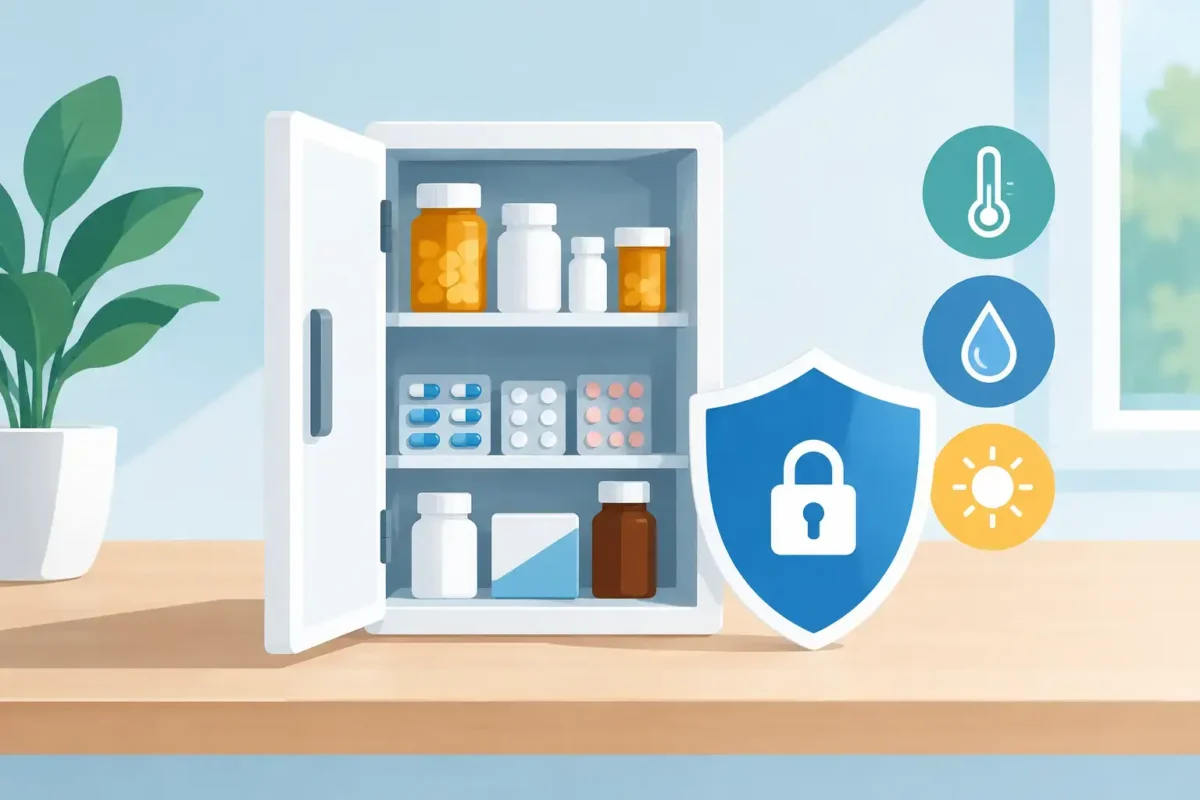
Humidity is a frequent problem. Bathrooms and kitchens are convenient, but they often expose products to steam, splashes, and fluctuating temperatures. A better choice is a dry, interior cabinet, drawer, or locked storage box away from sinks, appliances, and direct sunlight.
Keep containers tightly closed after each use. Do not leave lids loose while measuring, sorting, or organizing. For medications that come in bottles, check that the cap threads are clean and fully engaged. For blister packs, avoid pushing doses out until needed, since intact packaging offers an added barrier against air and moisture.
Refrigeration is not automatically safer. Some products require refrigeration, while others can be damaged by cold, condensation, or freezing. Only refrigerate a medication when its label, pharmacist, or manufacturer directs you to do so. If a refrigerated product freezes by mistake, ask a pharmacist before using it.
Secure Storage Prevents the Most Serious Mistakes
A secure location protects children, visitors, pets, and other household members. It also reduces the risk of diversion, theft, accidental ingestion, or someone taking the wrong product. Child-resistant caps are useful, but they are not childproof. A high shelf alone is not enough when a determined child can climb.
A locked cabinet, lockbox, or other restricted-access storage solution is a practical choice for medications with misuse potential, controlled substances, stimulant-related products, or any product that could cause harm if taken by the wrong person. Keep keys, combinations, and access codes private. Avoid storing these products in purses, backpacks, unlocked cars, bedside tables, or other places where access is easy.
Privacy and safety can work together. You do not need to display medication information to guests, but you should preserve the original label and ensure that the responsible user can identify the product at all times. Discreet storage should never become untraceable storage.
Keep Powdered and Regulated Products Contained
Powdered materials demand extra care because moisture, cross-contact, spills, and misidentification can happen quickly. Keep any powdered medication or chemical product in its original sealed container whenever possible. Do not transfer it to food containers, drink bottles, sandwich bags, or unmarked jars. Those choices increase the chance of accidental exposure and make accurate identification nearly impossible.
Store the container upright in a dry, stable location away from food, beverages, and household chemicals. Do not use kitchen equipment or eating surfaces for handling medication-related powders. If a container is damaged, leaking, wet, or no longer seals properly, isolate it from children and pets and seek professional disposal or replacement guidance rather than attempting to reuse a compromised product.
For regulated products, local, state, federal, and international rules may affect possession, transport, and disposal. A seller’s product description does not replace the law or medical direction. Buyers are responsible for understanding the rules that apply where they live and for following all labeling and safety instructions.
Check Your Supplies Without Creating Confusion
A brief monthly check can prevent a small storage issue from becoming a larger one. Review labels, expiration dates, package seals, and the condition of the storage area. Look for moisture inside containers, clumping where it is not expected, discoloration, broken tablets, damaged blister packs, leaking liquid, missing labels, or unusual odor.
Do not assume an expired product is harmless or simply weaker. Stability after expiration varies by product and storage history. Some medications may lose effectiveness, while others may no longer meet quality expectations. When in doubt, ask a pharmacist rather than taking a product that has been improperly stored, damaged, or expired.
Avoid combining different medications in one bottle to save space. That habit can lead to dosing errors, interaction concerns, and confusion during an emergency. If you use a weekly pill organizer, only transfer the doses needed for the short period ahead, keep the original containers available, and make sure the organizer remains secured from children and unauthorized users.
Travel Requires a Different Storage Plan
Travel adds risk because vehicles, luggage compartments, and checked bags can become extremely hot or cold. Carry essential medications in their original labeled containers and keep them with you when practical. Avoid leaving them in a parked vehicle, especially during summer or winter.
For air travel, security rules, documentation requirements, and restrictions can vary by destination. Regulated medications and precursor-related materials may be subject to additional scrutiny or restrictions. Confirm applicable rules before departure, and do not assume that packaging or possession that is accepted in one location will be accepted in another.
If a product requires a specific temperature range during travel, ask a pharmacist about an appropriate transport method. Do not place medication directly against ice packs unless instructed, since direct freezing can be as damaging as heat.
Know When to Ask for Help
A pharmacist is often the fastest source for medication storage questions. Contact one if a product was exposed to high heat, freezing temperatures, floodwater, smoke, moisture, or contamination. The same applies if you cannot verify the identity of a pill, powder, or liquid, or if a child, pet, or unauthorized person may have accessed it.
For suspected poisoning or accidental ingestion in the United States, contact Poison Control at 1-800-222-1222 or use emergency services for severe symptoms such as chest pain, seizures, trouble breathing, collapse, or loss of consciousness. Do not wait for symptoms if exposure may involve a dangerous amount or an unknown substance.
Medication storage is a small routine with a direct impact on safety. A dry, labeled, locked, and temperature-stable place gives every product the best chance of remaining what its packaging says it is – and keeps avoidable mistakes out of the home.
