Blog Posts
Ephedrine SDS: Safe Handling and Storage
Oct
An ephedrine SDS is not a formality to file away after delivery. It is the working safety document that tells trained personnel what material is present, how it may affect health, what protective measures apply, and what to do if a container leaks, spills, or is exposed to heat. For any regulated stimulant-related chemical, the current supplier-specific Safety Data Sheet should be reviewed before receiving, handling, repackaging, storing, or transporting the material.
Ephedrine is pharmacologically active and may be subject to federal, state, and local controls. Safe handling begins with accurate documentation, restricted access, trained staff, and compliance with the laws that apply to your location and intended use. An SDS supports those controls, but it does not replace a site-specific risk assessment, a written chemical hygiene plan, or advice from a qualified safety professional.
What an Ephedrine SDS Should Tell You
Under the OSHA Hazard Communication Standard, a compliant SDS follows a standardized 16-section format. The document should match the exact product on hand, including the chemical form, salt form where applicable, concentration, and supplier identity. A generic sheet for a different compound, grade, or formulation is not an acceptable substitute.
Start with Section 1, Identification. Confirm the product name, recommended use, supplier contact information, and emergency telephone number. This is also the point to compare the label, purchase records, lot information, and container details. If names or specifications do not match, quarantine the material until the discrepancy is resolved.
Section 2, Hazard Identification, provides the signal word, hazard statements, precautionary statements, and relevant classifications. Do not assume that a powder presents only an ingestion risk. Fine particles can become airborne during transfer, cleanup, or container opening. The SDS should address hazards associated with dust exposure, eye and skin contact, accidental ingestion, and the material’s broader health effects.
Sections 3 through 5 identify ingredients, first-aid measures, and fire-fighting information. These sections matter because ephedrine products may vary in composition and because the response to an incident depends on what was actually released. Emergency responders need accurate product information, not assumptions based on a trade name or appearance.
Read the Exposure Controls Before Opening a Container
The most useful part of an ephedrine SDS for routine operations is often Section 8, Exposure Controls/Personal Protection. It should identify applicable exposure limits where available and specify controls appropriate to the product’s physical form. Engineering controls come first. Work practices that minimize dust generation, use of appropriate local exhaust ventilation, and closed handling systems are generally more reliable than depending on personal protective equipment alone.
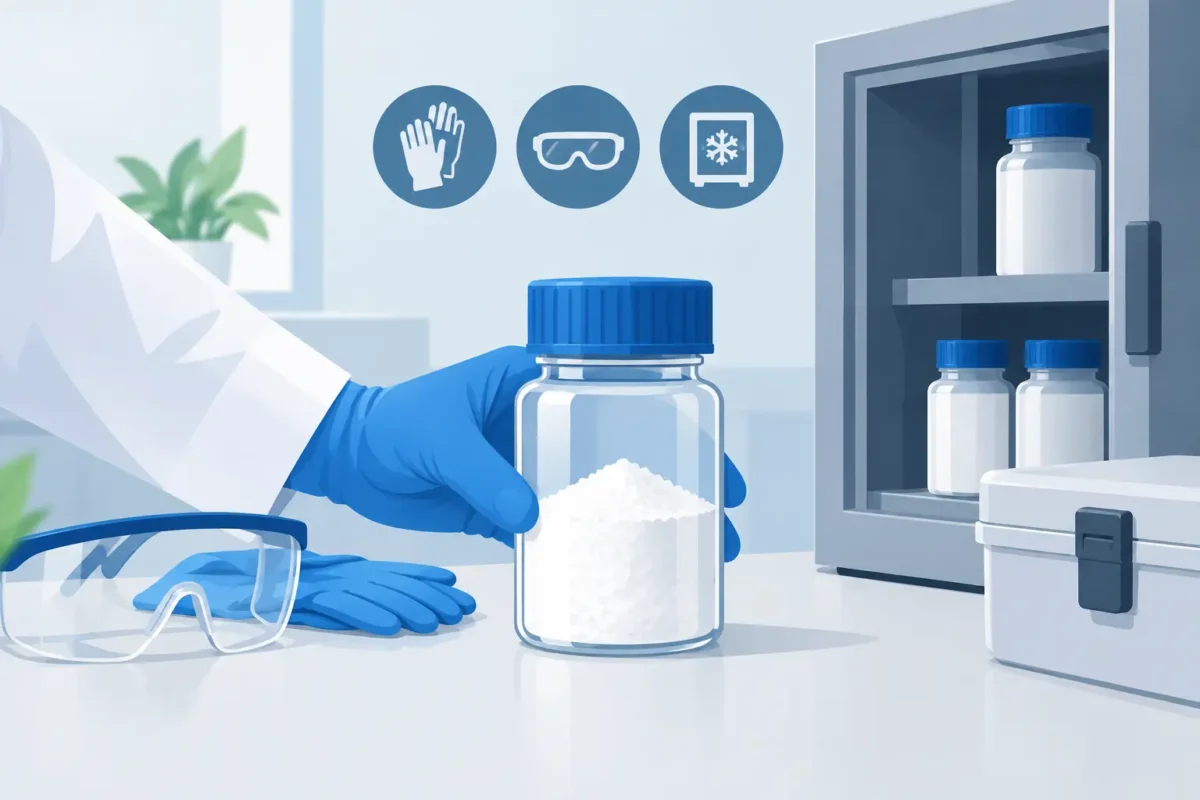
Personal protective equipment should be selected based on the SDS and the task. For a low-risk inspection of a sealed container, requirements may differ from those for transferring powder, cleaning a spill, or handling damaged packaging. Protective gloves, eye protection, and protective clothing may be necessary. Respiratory protection should never be improvised. If respiratory protection is required, it must be chosen, fitted, maintained, and used under a compliant respiratory protection program.
Good handling practice is deliberately uneventful. Keep containers closed when not in use, avoid actions that create dust, and do not eat, drink, smoke, or store food in chemical handling areas. Wash hands and exposed skin after work. Never rely on smell, color, or personal tolerance to judge whether exposure has occurred.
Medical information is not handling guidance
An SDS may describe acute symptoms or potential health effects, but it is not a dosing guide and should not be used to make medical decisions. Exposure-related symptoms, suspected ingestion, unusual heartbeat, chest pain, difficulty breathing, confusion, severe agitation, or loss of consciousness require urgent medical evaluation. Give responding clinicians the product label and SDS whenever possible.
Storage Requirements That Reduce Risk
Storage instructions are usually found in Section 7, Handling and Storage, and Section 10, Stability and Reactivity. Read both. Section 7 describes practical storage conditions, while Section 10 identifies conditions to avoid, incompatible materials, and potential decomposition concerns.
Store material in its original, clearly labeled container unless a documented procedure authorizes repackaging. The container should remain tightly closed, dry, protected from damage, and kept in an access-controlled area. Storage locations should be clean, cool, and suitable for chemical inventory management. Avoid leaving containers in unsecured workspaces, personal vehicles, or locations exposed to excessive heat, moisture, or direct sunlight.
Inventory discipline is a safety measure as well as a compliance measure. Maintain receiving records, lot details, quantities, access logs where appropriate, and the current SDS version. Separate damaged or questionable containers from usable inventory. If the label is unreadable, the seal is compromised, or the material cannot be positively identified, do not place it back into normal stock.
Because requirements vary by jurisdiction and quantity, buyers and handlers should verify whether additional controls apply to storage, recordkeeping, reporting, security, or controlled-substance precursor regulations. A product being sold or labeled for a lawful purpose does not remove the user’s responsibility to comply with local rules.
Spill Response: Control First, Clean Second
Section 6 of the ephedrine SDS outlines accidental-release measures. The right response depends on the amount released, whether dust is airborne, the condition of the area, and the training of personnel present. The first priority is to keep untrained people away and prevent further exposure.
For a minor release handled by trained personnel, avoid dry sweeping, compressed air, or any cleanup method that can spread powder into the air. Use the containment and collection approach specified in the SDS and your facility procedure. Wear the protective equipment identified for the task, prevent the material from entering drains or the environment, and place collected waste into a compatible, labeled container.
A larger spill, an unknown release, or a release involving ventilation systems should be escalated to qualified emergency response personnel. Do not turn a cleanup into a second exposure event by rushing, using unsuitable tools, or allowing unauthorized people into the area. Document the incident, assess why it occurred, and replace compromised labels, containers, or controls before operations resume.
Transport and Disposal Need Their Own Review
Sections 13 and 14 cover disposal and transport information. These sections are often overlooked, especially when a shipment is being moved between facilities or when packaging is discarded after use. Do not assume that an empty container is harmless. Residue can remain, and disposal requirements may apply to the container, absorbent materials, protective equipment, and cleanup waste.
Transport classification can depend on the exact product, form, concentration, packaging, destination, and mode of shipment. Verify current requirements before shipping or arranging carriage. International transport adds another layer of customs, import, export, and destination-country restrictions. Accurate declaration, secure packaging, and lawful documentation are essential.
Waste should be managed through approved channels and according to the SDS, local environmental requirements, and facility procedures. Never dispose of chemical material in regular trash, down a drain, or by burning it. When disposal guidance seems unclear, pause the process and consult an environmental health and safety professional or qualified waste contractor.
Keep the SDS Current and Accessible
A good SDS program is practical. Personnel should be able to find the correct document immediately during a receiving issue, exposure, spill, fire, or inspection. Keep current digital and accessible backup copies, and make sure workers know how to identify the right sheet for the right container.
Review the ephedrine SDS whenever the supplier changes, a new lot arrives with different documentation, the product form changes, or a workplace process changes. A controlled, well-documented handling process protects workers, preserves product integrity, and gives your operation a clear response path when something does not go as planned. The safest decision is often the simplest one: stop work, verify the documentation, and proceed only when the material and controls are fully understood.
