Blog Posts
Pharmaceutical Powder Contamination Risks Explained
Sep
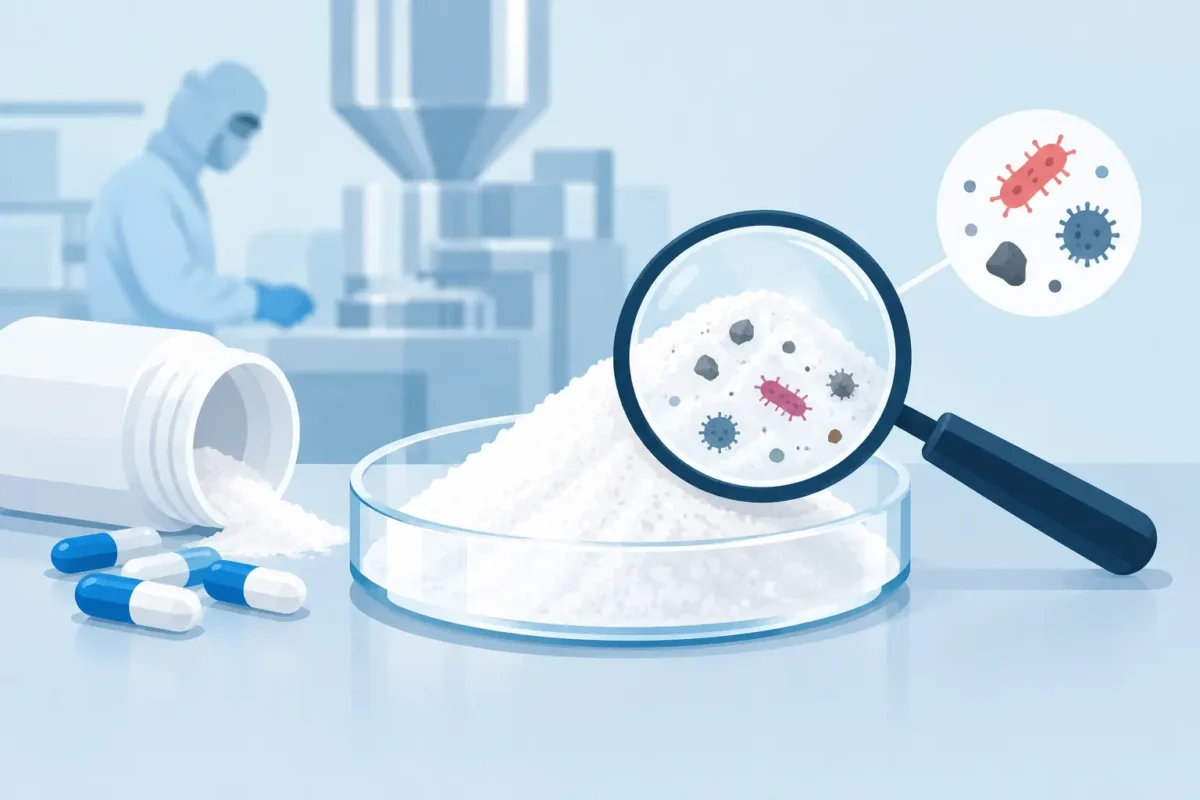
A powder can look clean, dry, and uniform while carrying a serious quality problem. Pharmaceutical powder contamination risks are not limited to obvious dirt or damaged packaging. They include the wrong active ingredient, trace carryover from another product, moisture-driven degradation, microbes, metals, solvents, and deliberate substitution. For any regulated active material, a low price or a confident purity claim is not proof of identity or safety.
Contamination matters because powders are concentrated, difficult to assess by sight, and easily affected by handling. A small error in material identity or strength can have consequences far beyond an unpleasant taste, odor, or reduced effectiveness. With stimulant-related compounds in particular, unexpected potency or an undisclosed ingredient can increase cardiovascular, neurologic, and overdose risks.
What Pharmaceutical Powder Contamination Really Means
Contamination is often used as a catch-all term, but several different failures can sit behind it. Understanding the difference helps buyers, handlers, and wholesale customers ask better questions before accepting material.
Physical contamination includes fibers, dust, glass, plastic, fragments from equipment, insects, or particles introduced through poor packaging. Chemical contamination may involve residual solvents, cleaning agents, lubricants, pesticides, heavy metals, or degradation byproducts. Cross-contamination occurs when a previous product remains on shared manufacturing, milling, filling, or weighing equipment.
The most serious category may be identity contamination: the material is not what the label says it is. This can happen through a labeling error, supplier fraud, poor inventory control, or intentional adulteration. A white crystalline powder is not a meaningful identity test. Many pharmaceutical and chemical materials look alike, even when their effects, legal status, and hazard profiles differ substantially.
Why Powder Products Have Higher Exposure Points
Powders are handled repeatedly. They may be milled, blended, weighed, transferred, packaged, transported, and repackaged before reaching the final buyer. Every transfer is a possible exposure point when procedures are weak.
Fine powders can also absorb moisture from humid air. Moisture may cause clumping, alter flow properties, accelerate chemical breakdown, or support microbial growth in materials that are susceptible. A package that is opened frequently in a warm bathroom, garage, warehouse, or vehicle is not being stored under controlled conditions.
Cross-contamination is especially relevant where many materials are processed in the same facility. A supplier can have a legitimate product catalog and still lack adequate cleaning validation, line clearance, segregation, or batch documentation. Shared scoops, scales, funnels, gloves, and work surfaces can transfer trace material from one product to another.
For materials sold in bulk, the trade-off is clear: larger orders may reduce unit cost, but they also create more time in storage and more handling events. If packaging is compromised, a kilogram-scale quantity can become a larger quality-management problem than a sealed, properly documented unit.
Common Sources of Pharmaceutical Powder Contamination Risks
The source of a contamination event is not always the final seller. Problems may begin with raw-material production, continue during manufacturing, or arise during shipping and storage. The most common routes include:
- Poor raw-material sourcing, including mislabeled or inadequately tested starting materials.
- Shared equipment that has not been properly cleaned or cleared between batches.
- Incomplete drying, unsuitable containers, or exposure to moisture during storage.
- Damaged seals, torn inner liners, and repackaging in uncontrolled environments.
- Deliberate adulteration or substitution for financial gain.
- Mislabeling, lot mix-ups, and inadequate chain-of-custody controls.
These risks do not all carry the same likelihood. A sealed product with matching lot records from a qualified manufacturer presents a different risk profile than material transferred into an unmarked bag with no batch information. Buyers should treat missing documentation as a real warning sign, not a minor administrative issue.
Warning Signs That Deserve a Stop, Not a Guess
Appearance can reveal obvious damage, but it cannot confirm purity. Discoloration, unexpected clumps, wet spots, unusual odor, foreign particles, broken seals, or an unlabeled inner package are reasons to stop using or distributing the material. They are not conditions to solve by drying, sifting, mixing, or transferring the powder into a new container.
Documentation problems are equally significant. A credible batch should be traceable through a lot or batch number, date information, storage guidance, and a certificate of analysis that corresponds to the actual lot. A generic certificate with no batch match, no testing date, or no identifiable laboratory information does not establish that the specific powder in hand was tested.
Be cautious with claims that sound absolute but contain no supporting details. Statements such as “99% pure” or “pharmaceutical grade” are marketing language unless tied to a defined specification and appropriate analytical results. Depending on the material, useful testing may include identity confirmation, assay, impurity profiling, residual-solvent analysis, moisture testing, microbial limits, and elemental impurity screening.
A certificate is still only one part of the picture. It should be consistent with the package label, seller records, and the physical condition of the shipment. If any part conflicts, quarantine the material until the discrepancy is resolved through the supplier or an independent qualified laboratory.
Storage Errors Can Create a New Contamination Problem
Even accurately identified material can become unsuitable after poor storage. Keep powders in their original, intact container whenever possible, with the label and lot information preserved. Transferring a product into a household jar, food container, or unlabeled bag removes critical traceability and raises the chance of mix-ups.
Storage requirements depend on the substance and packaging system, but several precautions apply broadly. Keep containers tightly closed, protected from excess heat, direct light, and humidity. Avoid areas with food preparation, pets, open windows, strong odors, or cleaning chemicals. Do not use the same work area or utensils for unrelated products.
Repeated opening creates risk. When a container must be accessed, use clean, dry handling equipment dedicated to that material. Never return unused material to the original container after it has been placed on a scale, tray, or other surface. This seemingly small habit can introduce contaminants into the full batch.
For wholesale inventory, basic segregation is essential. Clearly separate lots, maintain an intake record, and rotate stock according to verified expiration or retest dates. Do not rely on memory when multiple powders have similar packaging or appearance.
Quality Controls That Actually Reduce Risk
The strongest protection against contamination is a controlled supply chain, not a visual inspection after delivery. Qualified manufacturers and distributors should be able to explain how they manage supplier approval, lot traceability, packaging integrity, storage conditions, and complaint handling.
For high-risk or regulated materials, independent laboratory verification may be appropriate before use or redistribution. The correct test depends on the question being asked. Identity testing answers whether the material is the claimed compound. Assay testing estimates concentration. Impurity testing looks for unwanted chemical components. One result should not be mistaken for all of them.
There is also a practical limit to what a buyer can verify personally. Home color tests, taste, appearance, and informal online advice cannot establish pharmaceutical quality. Some field tests may provide limited preliminary information, but they do not replace validated laboratory methods and can produce misleading results when mixtures are involved.
If a product is intended for any medical or human-use context, regulatory status matters as much as analytical quality. A chemically authentic material may still be unauthorized, improperly labeled, or unsuitable for human use in a particular jurisdiction. Buyers must follow applicable federal, state, and local requirements, as well as import rules where relevant.
What to Do When Contamination Is Suspected
Stop handling the material beyond what is necessary to secure it. Keep the package, label, outer shipping materials, photographs, and all order or batch records. Do not attempt to correct a suspected contamination issue by washing, filtering, heating, or blending the powder. Those actions can worsen exposure and destroy evidence needed for a proper assessment.
Separate the item from other inventory to prevent a possible mix-up. If there has been exposure and symptoms such as chest pain, rapid or irregular heartbeat, severe agitation, confusion, seizures, trouble breathing, or loss of consciousness occur, seek emergency medical help immediately. Be prepared to provide responders with accurate information about the suspected substance and possible exposure route.
A reliable standard is simple: if identity, condition, or documentation cannot be verified, do not treat the powder as acceptable. Proper sourcing, sealed packaging, matched batch records, controlled storage, and qualified testing cost more than guesswork, but they are the controls that keep a quality concern from becoming a health emergency.
