Blog Posts
Precursor Chemical Disposal Guidance for Safer Handling
Sep
A small, forgotten container of powder can become a major safety issue when its label is missing, its seal has failed, or its contents are no longer needed. This precursor chemical disposal guidance is designed for adults, laboratories, warehouses, and other legitimate handlers who need to remove regulated or potentially hazardous materials without creating a spill, exposure event, fire risk, or compliance problem.
The safest disposal decision is rarely made at the sink, in the trash bin, or by attempting a home chemical reaction. Precursor chemicals may have hazardous physical properties, legal controls, or both. Their disposal route depends on the exact identity, concentration, container condition, quantity, and rules where the material is stored.
Precursor Chemical Disposal Guidance Starts With Identification
Before moving a container, confirm what it is. Read the original label, lot information, safety documentation, purchase records, and any inventory log. Separate confirmed materials from containers marked only with vague terms such as “powder,” “sample,” or “unknown.” An unknown material should be treated as potentially hazardous until a qualified waste provider determines otherwise.
Do not rely on appearance, odor, or assumptions. White powders can look identical while presenting very different risks. A material may be combustible, corrosive, toxic, reactive with moisture, or subject to special handling requirements. If the material is a regulated drug precursor or controlled substance, additional state and federal rules may apply to storage, transfer, recordkeeping, and destruction.
For businesses and bulk holders, accurate inventory is more than good organization. It shows what was received, what remains, why it became waste, and who had custody of it. Keep this information with the material, but do not attach paperwork in a way that can be damaged by a leaking container.
Check the container before touching it
Inspect from a safe distance first. Look for swelling, discoloration, crusting around the cap, dampness, broken seals, damaged glass, or a strong unusual odor. If the container is leaking, do not try to clean it with household products or transfer the contents into a food jar, drink bottle, or unmarked bag.
When there is no immediate danger, isolate the area from children, pets, visitors, and unnecessary staff. Avoid creating airborne dust. Do not sweep powders, use a household vacuum, or blow on spilled residue. Those actions can spread contamination and put material into the air.
Never Use Drains, Toilets, or Regular Trash
Pouring precursor chemicals into a sink, toilet, storm drain, or outdoor drain can contaminate water systems and may create hazardous reactions in plumbing. Water is not a universal solution. Some compounds react with moisture, while others can remain active in wastewater or damage treatment systems.
Regular trash is equally unreliable. Waste trucks compact materials, expose workers, and combine items that should not meet. Loose powder can escape a bag. A damaged bottle can expose sanitation workers. Incinerating, burning, or burying materials yourself can also release harmful fumes or contaminate soil.
Do not attempt to neutralize, dilute, dissolve, heat, burn, or chemically destroy a precursor material unless you are operating under a documented procedure written for that exact substance by qualified personnel. Improvised disposal instructions can turn a manageable waste issue into a medical emergency or fire response.
Secure Material Until a Qualified Disposal Route Is Confirmed
If the original container is intact, keep the material in it. Close the cap carefully without forcing damaged threads. Store it upright in a cool, dry, secured location away from food, medicine, heat sources, ignition sources, incompatible products, and direct sunlight.
If an outer layer of containment is needed, use a compatible secondary container that can contain a leak without reacting with the original package. The goal is containment, not repackaging the material for long-term storage. Clearly mark the outside as hazardous or unknown chemical waste, include the date, and restrict access.
For commercial inventory, use a written chain-of-custody record. Record the material name, amount, condition, storage location, date placed into waste status, and the employee responsible for the transfer. This protects staff and supports proper disposal documentation. It also helps prevent an old container from being returned to active stock by mistake.
Choose the Right Disposal Provider
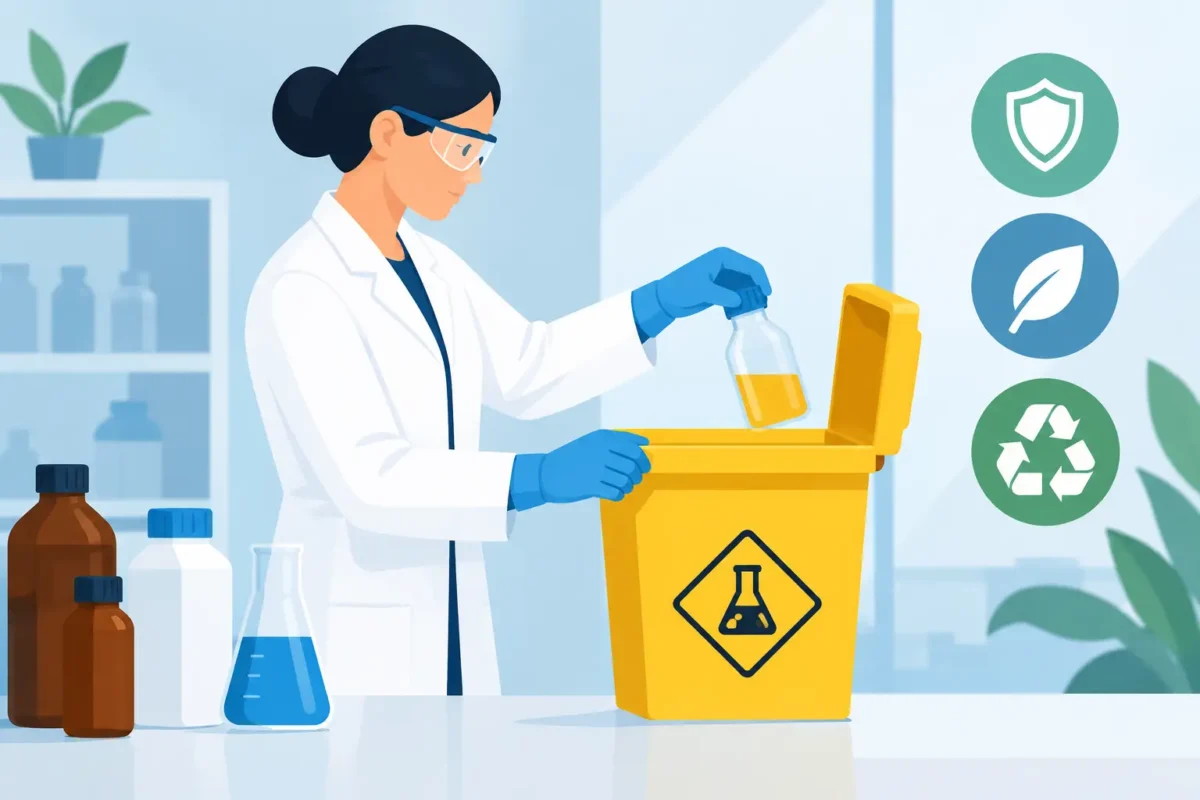
Household hazardous waste programs are often the correct starting point for small quantities of unwanted chemicals, but acceptance policies vary. Call before transport and describe the material honestly. Ask whether the facility accepts the specific compound, whether the material must remain in its original container, and whether an appointment is required.
Businesses, laboratories, resellers, and holders of bulk quantities will usually need a licensed hazardous-waste contractor. This is particularly likely when the material is regulated, unidentified, expired in a large volume, contaminated, leaking, or associated with commercial activity. A qualified contractor can determine waste classification, arrange compliant packaging, provide transport documentation, and manage final treatment or destruction.
Medication take-back programs are not automatically appropriate for raw powders, chemical precursors, or industrial quantities. These programs may accept finished consumer medications but refuse unlabeled chemicals, bulk active ingredients, and materials with hazardous characteristics. Confirm acceptance before taking anything to a collection point.
When law enforcement or emergency support may be necessary
If there is a fire, active leak, chemical exposure, strong fumes, suspicious activity, or an immediate risk to people nearby, move away from the area and call emergency services. Give responders the information available from the label, but do not handle the material further to obtain details.
If a suspected controlled substance or regulated precursor is abandoned, unlabeled, or connected to a security concern, contact the appropriate local authority or hazardous-materials office for instructions. Do not mail it, give it away, sell it, or transport it across jurisdictional lines without confirming the legal requirements.
Prepare for Transport Only After Approval
Once a waste facility or contractor has agreed to accept the material, follow its packing and transport instructions exactly. Keep containers closed, upright, and secured against tipping. Separate chemicals as directed. Never carry loose containers in a passenger compartment if a facility has advised a different method, and never leave chemicals in a hot vehicle.
Bring the available identification documents, such as the product label or safety information, if the receiving facility requests them. Do not remove labels to protect privacy. A legitimate waste provider needs enough information to protect its workers and select a safe disposal process. If privacy is a concern, ask the provider in advance what records are required and how they handle customer information.
Protect People During Routine Handling
A disposal plan should account for the person handling the container, not just the container itself. Wear the personal protective equipment specified for the known material. At a minimum, avoid bare-hand contact and keep hands away from your eyes, mouth, and face. Wash exposed skin with soap and water after handling packaging, even when no visible spill occurred.
Do not eat, drink, smoke, or prepare food near stored chemicals. Keep disposal work away from shared surfaces. If powder has contacted a work area, isolate that area and obtain substance-specific cleanup advice rather than guessing at a cleaning method.
Seek urgent medical help if someone has trouble breathing, chest pain, severe dizziness, fainting, confusion, seizures, burns, or eye exposure after contact with a chemical. For less severe but concerning exposure, contact Poison Control or a medical professional and provide the product name if known.
Disposal Is Part of Responsible Chemical Control
Good disposal begins before a product becomes waste. Purchase only quantities that can be lawfully stored, used, and managed within their shelf life and your facility’s capacity. Keep containers labeled from receipt through final disposition, store them securely, and inspect inventory regularly for damage or expiration.
For buyers handling specialized powders or regulated chemical products, the practical rule is simple: if the disposal route is unclear, stop handling the material and ask a qualified hazardous-waste provider. A careful call before disposal costs far less than an exposure, a contaminated drain, a damaged shipment, or a preventable legal problem.
