Blog Posts
Ephedrine Adverse Effects: Risks You Should Know
Sep
A racing pulse that does not settle, chest pressure, severe agitation, or a suddenly painful headache are not effects to brush off. Ephedrine adverse effects can range from short-lived stimulation to serious cardiovascular and neurologic emergencies, especially when use is excessive, repeated, or combined with other stimulants. Knowing the difference between expected stimulant activity and a warning sign can protect your health.
Ephedrine acts on the sympathetic nervous system, the body’s fight-or-flight response. That is why it may increase alertness, breathing, heart rate, and blood pressure. The same mechanism that creates its intended effects can also create significant risks. Personal health history, sensitivity, product strength, other substances, and frequency of use all affect how strongly someone reacts.
Common Ephedrine Adverse Effects
Some adverse effects occur even at relatively low exposure levels, particularly in people who are sensitive to stimulants. Nervousness, restlessness, irritability, tremor, sweating, dry mouth, nausea, and difficulty sleeping are commonly reported. A person may feel unusually alert at first but later experience exhaustion, poor concentration, or a low mood after the stimulant effect fades.
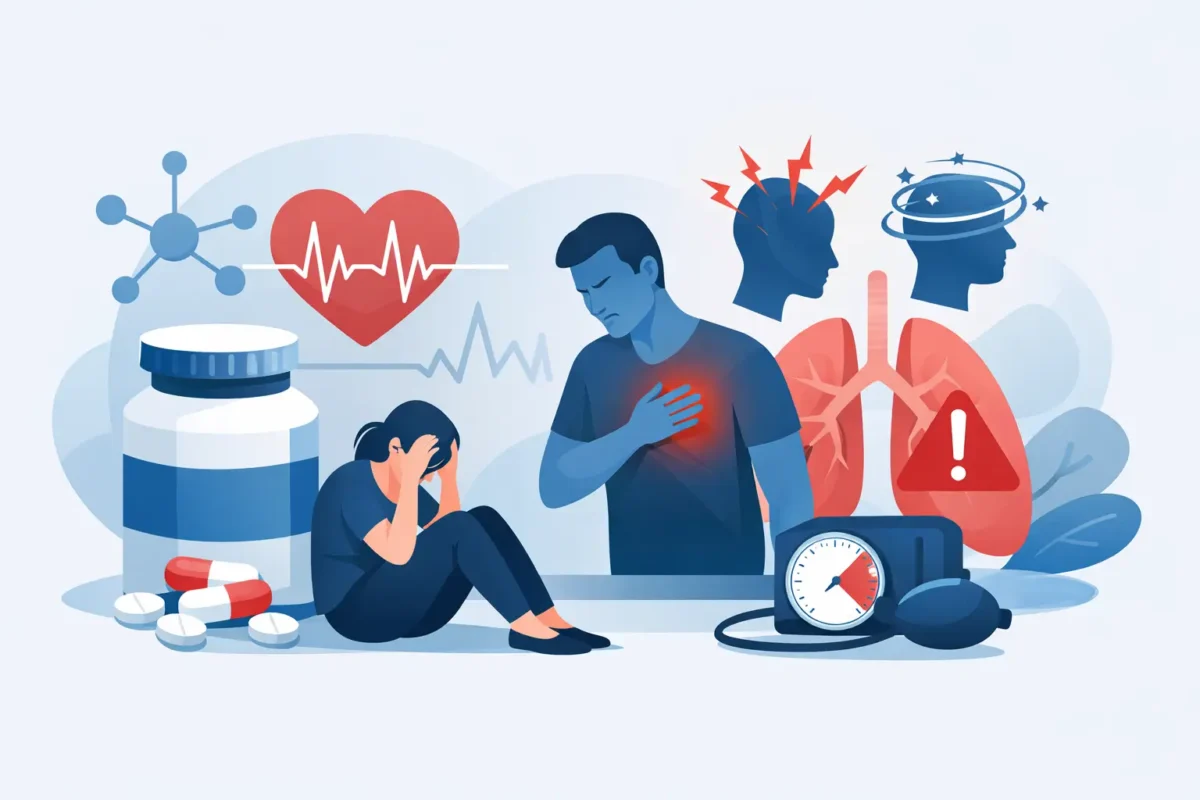
Cardiovascular effects deserve particular attention. Ephedrine can cause palpitations, a fast heartbeat, increased blood pressure, and a sensation of pounding in the chest. These symptoms are more concerning when they are new, intense, persistent, or accompanied by dizziness, shortness of breath, chest pain, weakness, or fainting.
Sleep disruption can become its own health problem. Poor sleep increases anxiety, reduces judgment, and may lead people to take more stimulant substances to function the following day. That cycle can make adverse effects more likely and harder to recognize early.
Serious Ephedrine Adverse Effects and Emergency Signs
Not every uncomfortable reaction is an emergency, but some symptoms require immediate medical attention. Seek emergency help for chest pain, trouble breathing, fainting, seizures, severe confusion, loss of coordination, hallucinations, or a very fast or irregular heartbeat. Sudden severe headache, vision changes, facial drooping, weakness on one side of the body, or difficulty speaking can signal a possible stroke and should be treated as an emergency.
Extremely high blood pressure is another concern. It can present with severe headache, chest discomfort, blurred vision, nausea, agitation, or shortness of breath. Do not attempt to manage these symptoms by taking additional substances, exercising, drinking alcohol, or waiting for the feeling to pass.
Overheating is also possible, especially in warm environments or during strenuous activity. Warning signs include heavy sweating or hot, dry skin, muscle cramps, nausea, confusion, and collapse. Move to a cooler place if possible and get urgent medical help when symptoms are severe or mental status changes.
If an overdose or dangerous reaction is suspected, contact emergency services or Poison Control right away. Be prepared to tell responders what was taken, approximately when it was taken, and whether alcohol, caffeine, prescription medications, or other stimulants were involved. Clear information helps clinicians respond faster.
Who Faces a Higher Risk?
Ephedrine is not equally risky for every adult. People with heart disease, coronary artery disease, arrhythmias, high blood pressure, hyperthyroidism, glaucoma, diabetes, anxiety disorders, panic disorder, or a history of stroke may face greater risks. Individuals with kidney or liver impairment may also need medical guidance because drug effects can be less predictable.
Age matters, but it is not the only factor. A younger person with an undiagnosed heart rhythm issue may be vulnerable, while an older adult may have medication interactions or underlying cardiovascular disease that increases risk. Prior tolerance does not guarantee future safety. A person can react differently after illness, dehydration, poor sleep, a change in body weight, or the addition of another medication.
Pregnancy and breastfeeding require particular caution. Ephedrine can affect maternal heart rate and blood pressure and may expose the fetus or infant to stimulant effects. Professional medical advice is necessary before any exposure in these situations.
Interactions Can Turn a Mild Reaction Into a Serious One
Many severe episodes involve combinations rather than ephedrine alone. Caffeine from coffee, energy drinks, pre-workout formulas, and concentrated caffeine products can add to increased heart rate, blood pressure, anxiety, and insomnia. Combining multiple stimulants is not a way to improve results. It raises the chance of an unpredictable reaction.
Certain prescription and nonprescription medications can also interact. Examples include other decongestants, attention-deficit/hyperactivity disorder stimulants, some asthma medications, thyroid hormone, and medications that affect blood pressure or heart rhythm. Monoamine oxidase inhibitors, known as MAOIs, are especially concerning because dangerous blood-pressure elevation can occur with sympathomimetic substances such as ephedrine.
Alcohol is not a protective counterbalance. It can impair judgment, mask warning signs, worsen dehydration, and encourage repeat use. Illicit stimulants and some recreational drugs can sharply increase cardiovascular strain and the risk of agitation, overheating, abnormal heart rhythms, seizures, or stroke.
Before using any stimulant-related product, review all medicines, supplements, and substances with a qualified pharmacist or clinician. Include products that may seem harmless, such as cold remedies, weight-loss products, herbal stimulants, and energy supplements.
Purity Does Not Remove Pharmacologic Risk
Material identity and handling matter, but they do not make ephedrine risk-free. Even a product represented as high purity can produce adverse effects because those effects come from ephedrine’s action in the body. A smaller exposure may still be unsafe for someone with a sensitive cardiovascular system, a contraindicated medication, or an unrecognized medical condition.
The risk becomes less predictable when a product is mislabeled, contaminated, improperly stored, or measured inaccurately. Powders create additional handling concerns because small measurement errors can materially change exposure. Never assume that a familiar appearance, prior use, or a label claim means the material is appropriate for a particular person or purpose.
If there is uncertainty about identity, concentration, storage conditions, or possible contamination, the safest choice is not to use the material. Keep any chemical or medication product secured away from children, pets, and anyone for whom it was not intended. Accidental exposure can be dangerous.
Dependence, Tolerance, and the Stimulant Cycle
Ephedrine can be habit-forming for some users, particularly when it is used repeatedly for energy, appetite suppression, performance, or staying awake. Tolerance may develop, meaning the same effect feels weaker over time. Chasing the original effect by increasing exposure is a major pathway to more severe adverse effects.
Psychological dependence can show up as feeling unable to work, train, socialize, or get through the day without a stimulant. Stopping after repeated use may bring fatigue, increased appetite, low mood, irritability, sleep changes, and cravings. These symptoms can be uncomfortable, but returning to use or escalating intake may extend the cycle.
A clinician can help assess whether a pattern of use has become unsafe. Support is particularly valuable for anyone experiencing cravings, repeated failed attempts to stop, worsening anxiety, financial or relationship problems, or continued use despite heart symptoms and sleep disruption.
A Clearer Safety Standard
Do not treat adverse effects as proof that a stimulant is working. Feeling shaky, panicked, unable to sleep, or aware of a pounding heartbeat is your body signaling stress, not a benchmark to push through. Stop use and seek medical advice for symptoms that are troubling, recurring, or escalating.
For people considering ephedrine in any context, the practical question is not simply whether an effect is common. The question is whether the possible benefit justifies the individual risk, given health history, other medications, and the possibility of a serious interaction. When the answer is uncertain, professional guidance is the safer path.
Your heart rate, blood pressure, sleep, and mental state are not trade-offs to ignore. Treat concerning symptoms early, avoid stimulant stacking, and get urgent help when emergency signs appear.
