Blog Posts
Practical Guide to Cardiac Symptom Awareness
Nov
A racing pulse after a stimulant, unexplained chest pressure during routine activity, or sudden shortness of breath should never be dismissed as a minor side effect. This guide to cardiac symptom awareness is for adults who may encounter stimulant-related risks and need a clear line between symptoms to monitor and symptoms that demand emergency action.
Cardiac symptoms can look different from person to person. Age, underlying health conditions, dose, combinations with other substances, dehydration, sleep loss, and recent exertion all affect the level of risk. The safest response is not to guess what is happening. Know the warning signs, stop further exposure, and get medical help quickly when red flags appear.
Cardiac Symptoms That Require a 911 Call
Call 911 immediately if chest discomfort is severe, persistent, or accompanied by other concerning symptoms. Do not drive yourself to the emergency room, and do not wait to see whether it passes after resting, drinking water, or taking another substance.
The most urgent signs include:
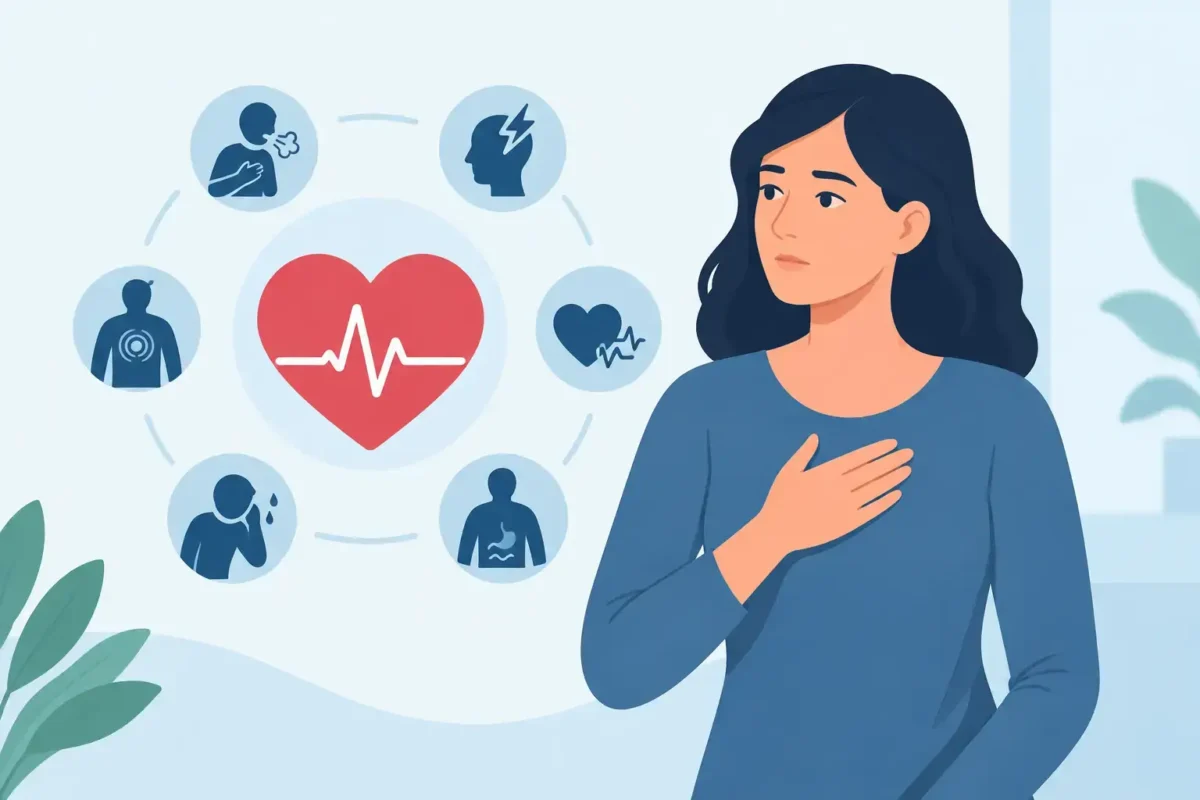
- Chest pressure, squeezing, heaviness, burning, or pain that lasts more than a few minutes or returns repeatedly
- Pain or discomfort spreading to the arm, shoulder, back, neck, jaw, or upper stomach
- Shortness of breath, fainting, near-fainting, cold sweating, nausea, or a sudden feeling of impending doom
- A very fast, irregular, or pounding heartbeat with weakness, confusion, chest discomfort, or trouble breathing
A heart attack does not always feel like dramatic chest pain. Some people experience unusual fatigue, indigestion-like pressure, nausea, back pain, or breathlessness instead. Women, older adults, and people with diabetes can be especially likely to have less typical symptoms. If the symptoms could be cardiac, treat them as cardiac until a clinician says otherwise.
If someone is unconscious, not breathing normally, or collapses after a suspected stimulant exposure, call 911 and begin CPR if you are trained to do so. Follow the dispatcher’s instructions. Do not give them food, drinks, alcohol, sedatives, or additional substances.
A Guide to Cardiac Symptom Awareness After Stimulant Use
Stimulants can increase heart rate, blood pressure, body temperature, and the workload placed on the heart. This includes ephedrine and pseudoephedrine products, as well as prescription stimulants, large amounts of caffeine, nicotine, certain pre-workout formulas, and illicit stimulants. Combining substances can raise risk even when each product is viewed as familiar on its own.
A rapid heartbeat is not automatically an emergency, but context matters. A brief increase in pulse after exertion can be expected. A resting pulse that remains unusually high, feels irregular, or occurs alongside dizziness, chest tightness, breathlessness, or weakness should be assessed urgently. The same applies to palpitations that begin suddenly and do not settle with rest.
Do not use another dose to counter fatigue, anxiety, or a perceived “crash.” Do not try to balance a stimulant with alcohol, cannabis, opioids, benzodiazepines, or unverified supplements. Mixing drugs can hide symptoms while increasing strain on the heart, breathing, and nervous system. It can also make it harder for emergency clinicians to identify what is causing the problem.
If symptoms are mild but new, stop using the suspected product, sit or lie down in a safe place, avoid physical exertion, and arrange prompt medical advice. In the United States, Poison Control at 1-800-222-1222 can provide confidential, expert guidance for a possible exposure when there is no immediate emergency. Chest pain, collapse, severe shortness of breath, confusion, or serious palpitations are not Poison Control-only situations. Call 911.
Symptoms That Need a Prompt Medical Checkup
Not every cardiac concern begins as an emergency. Repeated symptoms deserve a medical evaluation even if they go away. This is particularly true if symptoms occur with exertion, after stimulant use, or during periods of poor sleep and high stress.
Make a timely appointment for recurring palpitations, frequent resting heart rates that seem unusually elevated, reduced exercise tolerance, swelling in the feet or ankles, unexplained fatigue, or breathlessness when lying flat. Also seek evaluation for repeated dizziness, a pulse that feels irregular, or chest discomfort that appears during exercise and improves with rest.
A clinician may check blood pressure, heart rhythm, medication interactions, thyroid function, electrolyte levels, and other causes. Be direct about all substances used, including powders, tablets, energy products, decongestants, supplements, nicotine, alcohol, and recreational drugs. This information is medical safety information, not a moral judgment. Leaving out a substance can lead to the wrong diagnosis or treatment.
Why Product Strength and Combinations Change Risk
Cardiac risk is not determined by one label or one previous experience. A person may tolerate a substance once and develop symptoms another time because the amount, actual concentration, hydration level, sleep status, or combination has changed. Unverified powders and loosely measured materials create additional uncertainty because potency and contaminants may not match expectations.
Risk rises when stimulants are combined with other stimulants, certain antidepressants, monoamine oxidase inhibitors, some asthma medicines, thyroid medication, cocaine, or high-caffeine products. Decongestants can also interact with medications used for blood pressure and heart conditions. People with high blood pressure, coronary artery disease, arrhythmias, cardiomyopathy, glaucoma, hyperthyroidism, panic disorder, or a history of stroke should be especially cautious and seek personalized medical guidance before using stimulant products.
Family history matters too. A close relative with sudden cardiac death, inherited rhythm disorders, cardiomyopathy, or early heart disease can change the risk calculation. So can a personal history of fainting during exercise or unexplained seizures. These are not details to ignore simply because a person is young or physically active.
What to Record Before Symptoms Fade
When symptoms are not severe enough for emergency care but you plan to speak with a clinician, write down what happened while the details are fresh. Record the time symptoms began, what you felt, how long they lasted, what you had taken that day, approximate amounts, food and fluid intake, recent exercise, and whether the symptoms improved with rest.
If you have a home blood-pressure cuff or wearable device, save readings but do not let a normal-looking number override serious symptoms. Consumer devices can be useful context, yet they cannot rule out a heart attack or dangerous arrhythmia. A normal pulse reading does not explain chest pressure, and a device warning is not a diagnosis.
Avoid exercising to “test” whether the problem is gone. Do not resume stimulant use just because symptoms stop. A symptom-free period may mean the trigger has passed, but it does not prove that the heart was unaffected or that another exposure will be safe.
Build a Safer Response Plan
Cardiac symptom awareness works best before a scare happens. Know your local emergency number, keep a current medication list, and tell a trusted person if you have a history of heart symptoms or stimulant-related reactions. If you choose to use any stimulant-containing product, avoid stacking it with other stimulants, alcohol, or unknown substances, and do not use it before intense exercise or when severely sleep-deprived.
The practical rule is simple: chest symptoms, breathing changes, fainting, severe weakness, and irregular pounding heartbeats deserve respect. Acting early is not overreacting. It is the decision that gives clinicians the best chance to identify a serious problem before it becomes a permanent one.
