
Blog Posts
Guide to Poisoning First Aid for Families
Nov
A container with an unreadable label, a spilled powder, or a person who suddenly becomes confused is not the moment to search for home remedies. This guide to poisoning first aid is built around the actions that protect a person first: get expert help, prevent further exposure, and watch for life-threatening changes.
Poisoning can involve medicines, household chemicals, alcohol, stimulants, gases, plants, contaminated products, or unknown powders. The right response depends on the substance and how it entered the body. What does not change is the need to act promptly and avoid guesswork.
Start with the emergency check
Call 911 immediately if the person has collapsed, is having a seizure, cannot be awakened, has trouble breathing, has blue or gray lips, or is rapidly getting worse. Do not drive a severely ill or unconscious person yourself if emergency medical services are available. First responders can provide airway support, oxygen, monitoring, and urgent treatment on the way to care.
For an exposure that is not immediately life-threatening, call Poison Control at 1-800-222-1222 in the United States. This service is available around the clock and can advise on the specific product, amount, route of exposure, age, weight, symptoms, and next steps. Call even if the person feels normal. Some poisonings have delayed effects, especially with extended-release medications, stimulants, acetaminophen, corrosive chemicals, and certain pesticides.
If you are outside the United States, contact your local poison center or emergency number. Keep the product container, packaging, label, or a clear photo available. Accurate information helps medical professionals make faster decisions.
Guide to poisoning first aid by exposure route
If something was swallowed
Remove anything still in the mouth and gently wipe the mouth out. Do not induce vomiting unless Poison Control or a clinician specifically tells you to do so. Vomiting can cause choking, aspiration into the lungs, or a second burn from caustic substances.
Do not give salt water, mustard, raw egg, alcohol, activated charcoal, or large amounts of water or milk as a home treatment. These responses can be harmful or can interfere with professional care. Do not give anything by mouth to a person who is drowsy, vomiting, seizing, confused, or unable to swallow normally.
If the person is awake and able to speak, call Poison Control while staying with them. Be prepared to state what was taken, when it happened, how much may be missing, and whether alcohol or other substances were involved. Never assume that a “small amount” is harmless, particularly when a child, an older adult, or a person with heart, liver, or kidney disease is involved.
If a substance is on the skin
Move away from the spill or contaminated area. Remove contaminated clothing, shoes, watches, and jewelry without spreading material onto unaffected skin. Brush away dry powders before rinsing, but do not create airborne dust or rub the substance deeper into the skin.
Rinse exposed skin under cool or lukewarm running water for at least 15 minutes. Use mild soap after the initial rinse when appropriate. Do not apply creams, neutralizing chemicals, oils, or ointments unless directed by a professional. A chemical burn can look minor at first and worsen over time, so seek advice for any persistent pain, redness, blistering, numbness, or discoloration.
If a substance gets in the eyes
Begin flushing immediately. Hold the eyelids open and rinse with clean, lukewarm running water for 15 to 20 minutes. Remove contact lenses if they come out easily, then continue rinsing. Avoid forcefully removing a lens or putting eye drops, oils, or other chemicals in the eye.
After flushing, call Poison Control or seek urgent medical evaluation, especially for acids, alkalis, solvents, unknown powders, severe pain, vision changes, or continued tearing. Time matters with eye exposures, and thorough irrigation is the first priority.
If fumes, gas, or dust were inhaled
Get to fresh air only if you can do so safely. Do not enter a room, garage, vehicle, shed, or enclosed work area if fumes may still be present. A rescuer can become a second victim within minutes. Call 911 for suspected carbon monoxide, industrial gas, chemical fumes, or anyone with breathing difficulty, chest pain, confusion, fainting, or severe headache.
For powder exposure, avoid sweeping, shaking clothing, or using compressed air. These actions can send particles back into the breathing zone. Leave the area, isolate the material if it is safe to do so, and follow professional guidance for cleanup.
Protect the airway and monitor changes
If a person is unconscious but breathing normally, place them on their side in the recovery position. Keep the airway clear, loosen tight clothing around the neck, and watch their breathing until help arrives. If they stop breathing or you cannot find normal breathing, call 911 and begin CPR if you are trained or directed by the dispatcher.
Seizures require calm, practical protection. Clear hard objects away, cushion the head if possible, and time the seizure. Do not restrain the person and do not put anything in their mouth. Call 911 if a seizure lasts more than five minutes, repeats, occurs in water, happens during pregnancy, or is the person’s first known seizure.
Stimulant-related toxicity can include chest pain, very fast heartbeat, severe agitation, overheating, panic, hallucinations, tremor, vomiting, or seizures. Do not try to “balance it out” with alcohol, sedatives, more medication, or another substance. Keep the person in a cool, quiet place if safe, reduce exertion, and get medical help. Mixing substances makes effects less predictable and can sharply increase risk.
Information that makes help more effective
When you call for advice or emergency care, give direct facts rather than assumptions. State the person’s age and approximate weight, the product name and strength, the possible amount, the time of exposure, current symptoms, and any other medicines, alcohol, or drugs involved. Say whether the product was prescribed, purchased over the counter, transferred from another container, or unidentified.
Honesty is a safety measure. Emergency clinicians and poison specialists are focused on treatment, not judgment. Withholding information about a powder, stimulant, medication combination, or intentional use can delay the care that matters most.
Take the original container or label to the emergency department if it is safe to do so. Do not carry leaking containers in a vehicle, and do not bring an unknown substance close to your face to inspect it. A photograph of the label, lot information, and remaining contents can be enough for identification.
Common mistakes to avoid
The most dangerous first-aid mistakes often come from trying to act fast without reliable instructions. Do not wait for symptoms before calling about a potentially serious exposure. Do not force fluids. Do not induce vomiting. Do not give a person someone else’s medication. And do not rely on internet identification of pills or powders when professional poison advice is available.
It also helps to avoid leaving a person alone after a suspected poisoning. Symptoms can change quickly, especially when the exposure involved sedating medicines, opioids, alcohol, heart medications, stimulants, or extended-release products. If the person becomes sleepy, confused, restless, or unsteady, reassess their breathing and seek urgent help.
Prevention after the immediate emergency
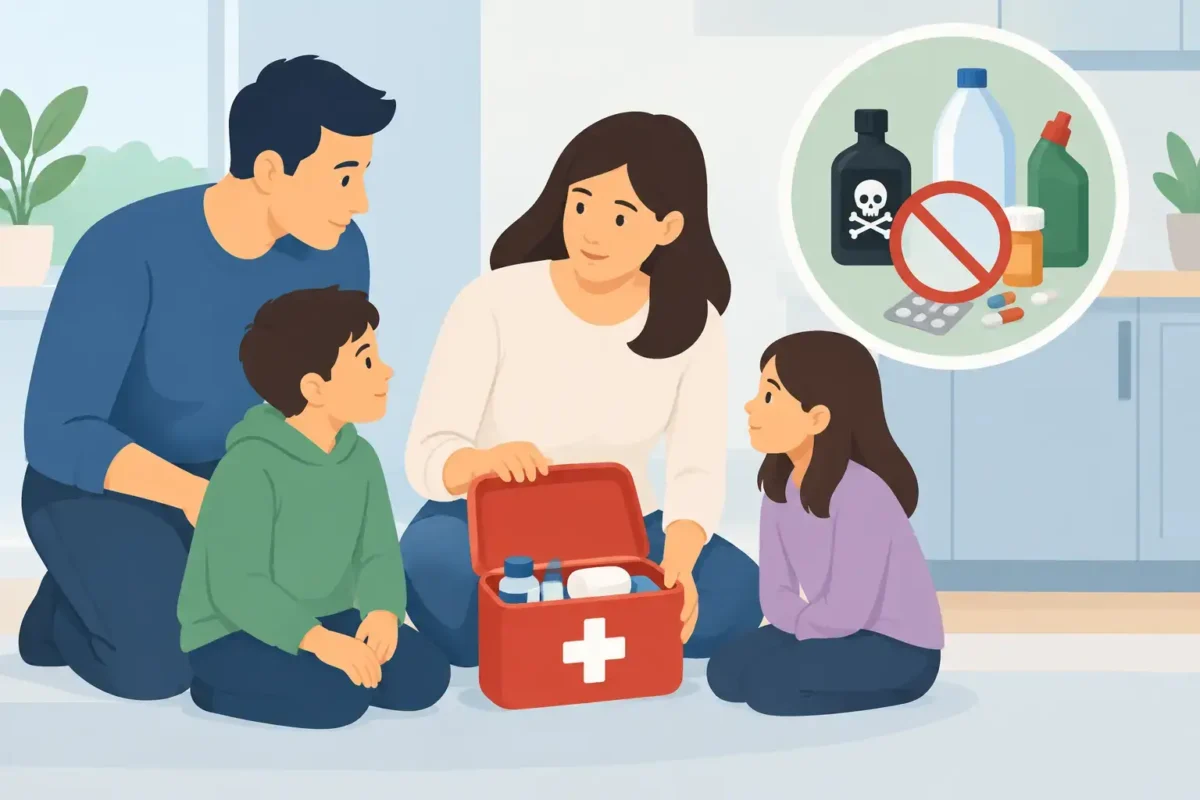
Once the person is safe, address the conditions that allowed the exposure. Store medicines and chemicals in original labeled containers, keep them secured from children and visitors, and never use food or drink containers for powders or liquids. Separate products with similar packaging, review expiration dates, and dispose of unneeded medication through an approved option where available.
For households that keep high-risk medications, discuss an emergency plan before one is needed. Everyone should know where product labels are kept, how to reach Poison Control, and when to call 911. Fast, factual action is more useful than panic, and professional guidance is always better than a risky home remedy.
